Building tools for creators today looks very different from what it did a few years ago.
Back then, many products focused on helping creators try new formats or publish faster. Now the problems are more practical. Creators deal with large volumes of content, repeated workflows, collaboration, revisions, and deadlines. Tools are expected to handle this quietly, without getting in the way.
AI shows up in almost every new creator tool, but it rarely becomes the reason people stick with the product. What matters is whether the tool fits into daily work. If using it requires extra steps, setup, or learning how the system “thinks”, adoption drops quickly.
This is where many AI tools for creators struggle. Even when AI is central to the platform, creators don’t want to manage prompts, modes, or configurations. They want the result to appear at the right moment and make the task easier, not more complicated.
The next wave of the creator economy is shaped less by what AI can do and more by how naturally it’s built into real creative workflows.
In this article, we focus on how AI tools for creators are built today and what separates usable products from features that look good but don’t stick.
Why Creator Tools Are Worth Building Right Now
Building tools for creators has become one of the most interesting product spaces in the last few years, not because of hype, but because of clear economic signals.
The creator economy is already a significant and measurable market. According to industry research, its global value reached $205.25 billion in 2024 and is expected to continue growing as creators increasingly monetize directly through subscriptions, digital products, and brand partnerships.
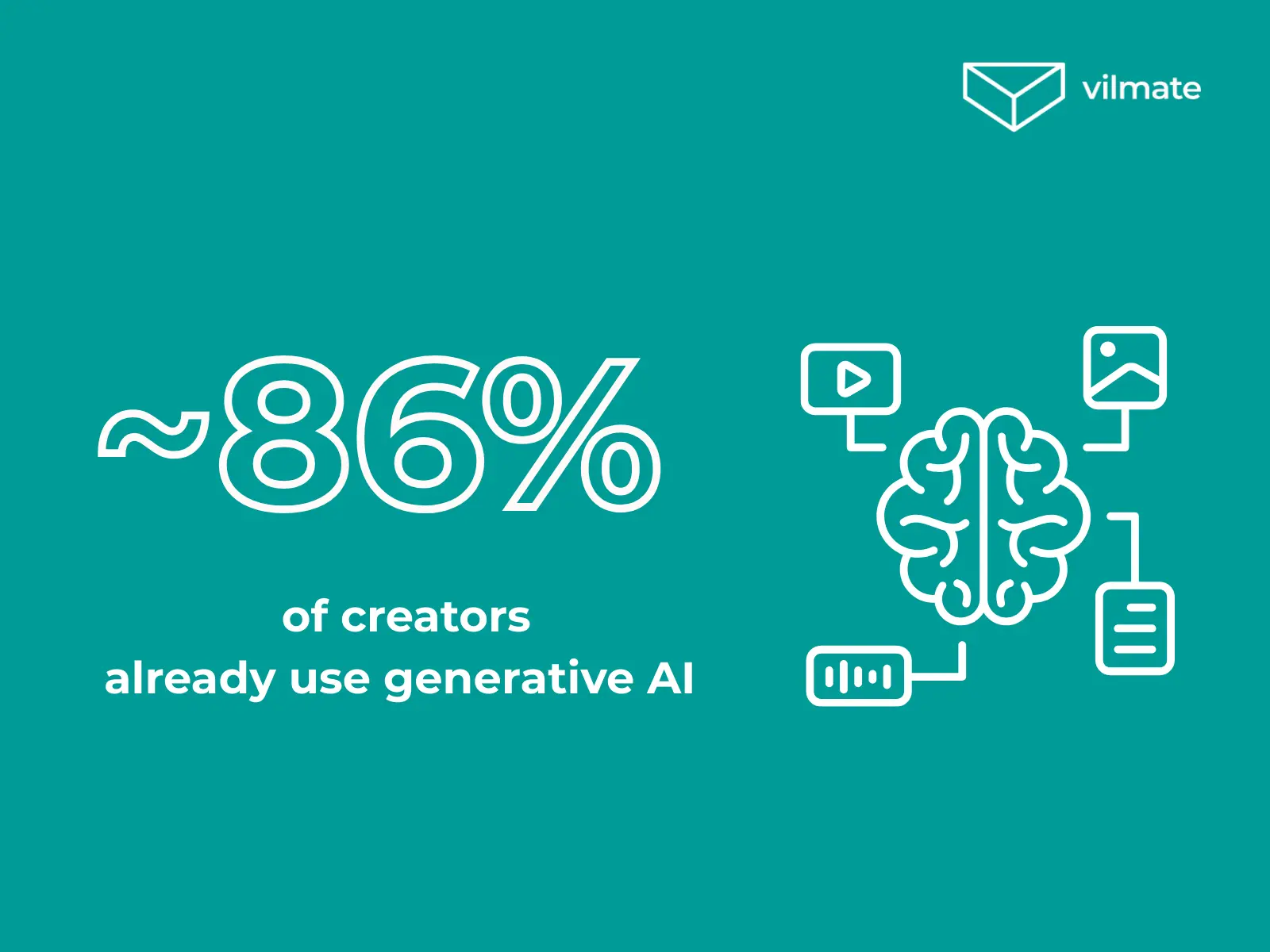
At the same time, creators are actively adopting new technology to support their workflows. Recent industry surveys show that around 86% of creators already use generative AI in their regular work, mainly to speed up production and handle repetitive tasks.
Together, these numbers explain why creator tools attract so much attention from founders. There is both a proven market size and clear demand for software that helps creators work faster and more efficiently.
Creator tools also have several properties that make them especially compelling to build:
- users interact with them frequently, often daily
- workflows are repeatable, which makes automation valuable
- minor improvements compound over time
- friction is noticed immediately
At the same time, this space is unforgiving. Creators are willing to try new tools, but they abandon them just as quickly when something feels heavy or interrupts their flow. A product can be powerful and still fail to stick if it demands too much attention or learning.
That’s why building creator tools today is less about adding more AI capabilities and more about making sure those capabilities fit naturally into real creative work.
Creators Expect Tools That Fit Into Daily Work
Creator tools are no longer judged only by what they can do. They’re judged by how naturally they fit into everyday work.
AI appears in creator products in two very different forms. Sometimes it’s a standalone tool. Sometimes it’s part of a larger creator platform. Both models are valid, but they set very different expectations for users.
Standalone AI tools usually solve a narrow task. Generate an image. Enhance audio. Rewrite a caption. Tools like these often expect creators to be explicit: provide input, tweak settings, review the output. In this context, a bit of friction is acceptable because the task is contained and the value is clear.
The expectations change when AI becomes part of a broader platform.
In creator platforms such as Canva, Notion, or Adobe products, AI is not treated as a separate tool that needs to be operated. It supports actions creators already understand: designing layouts, organizing content, editing visuals, or speeding up repetitive steps. The user stays focused on the task rather than on managing the AI.
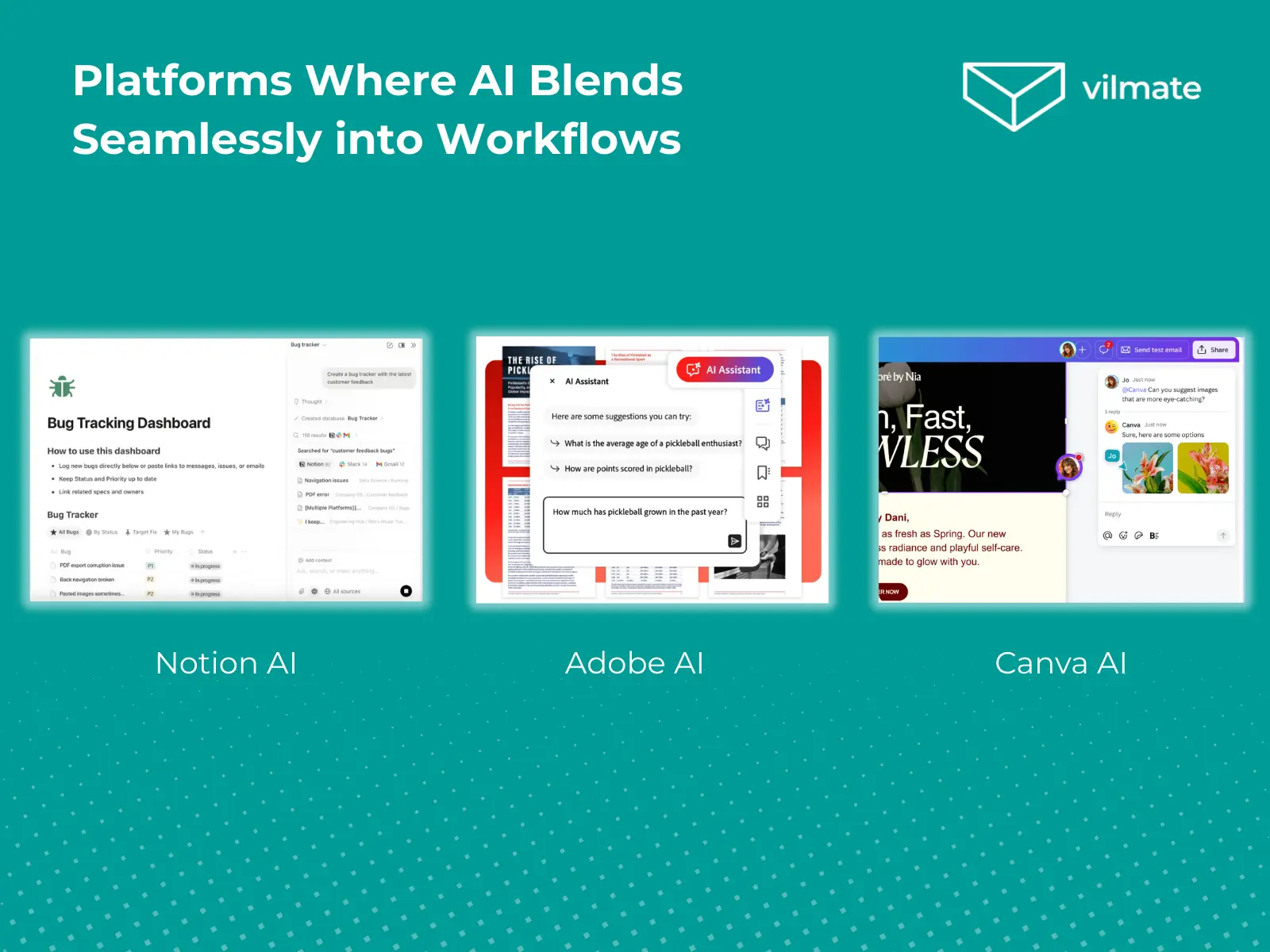
This distinction matters because tolerance for friction is much lower at the platform level. When AI is embedded into a creator platform, users don’t expect prompts, modes, or configuration screens. Any extra step feels like the tool is asking for attention rather than providing help.
In practice, creators expect platform-level AI to behave in a few specific ways:
- appear inside familiar actions rather than as a separate feature
- improve results without requiring instructions or setup
- work with sensible defaults from the first interaction
- stay optional and easy to ignore when not needed
When these expectations aren’t met, AI doesn’t feel like an advantage. It feels like another layer the creator has to manage. Over time, those tools are the first to be removed from the workflow.
As more creator platforms embed AI into their core offerings, the distinction between “AI as a tool” and “AI as a capability” becomes harder to ignore. Creators don’t want to operate intelligence. They want platforms that quietly apply it on their behalf.
Not Every Creator Tool Will Survive
Creators already use too many tools. Adding one more is rarely appealing.
A new creator tool only has a chance if it clearly replaces something or removes real friction. Otherwise, it gets tested briefly and dropped, even if the idea is solid.
This is why isolated features won’t win the next wave. It will be won by tools that become part of the daily infrastructure.
In practice, this means creator tools that either:
- replace several tools at once
- integrate deeply into an existing creator platform
- take over operational work that creators don’t want to manage
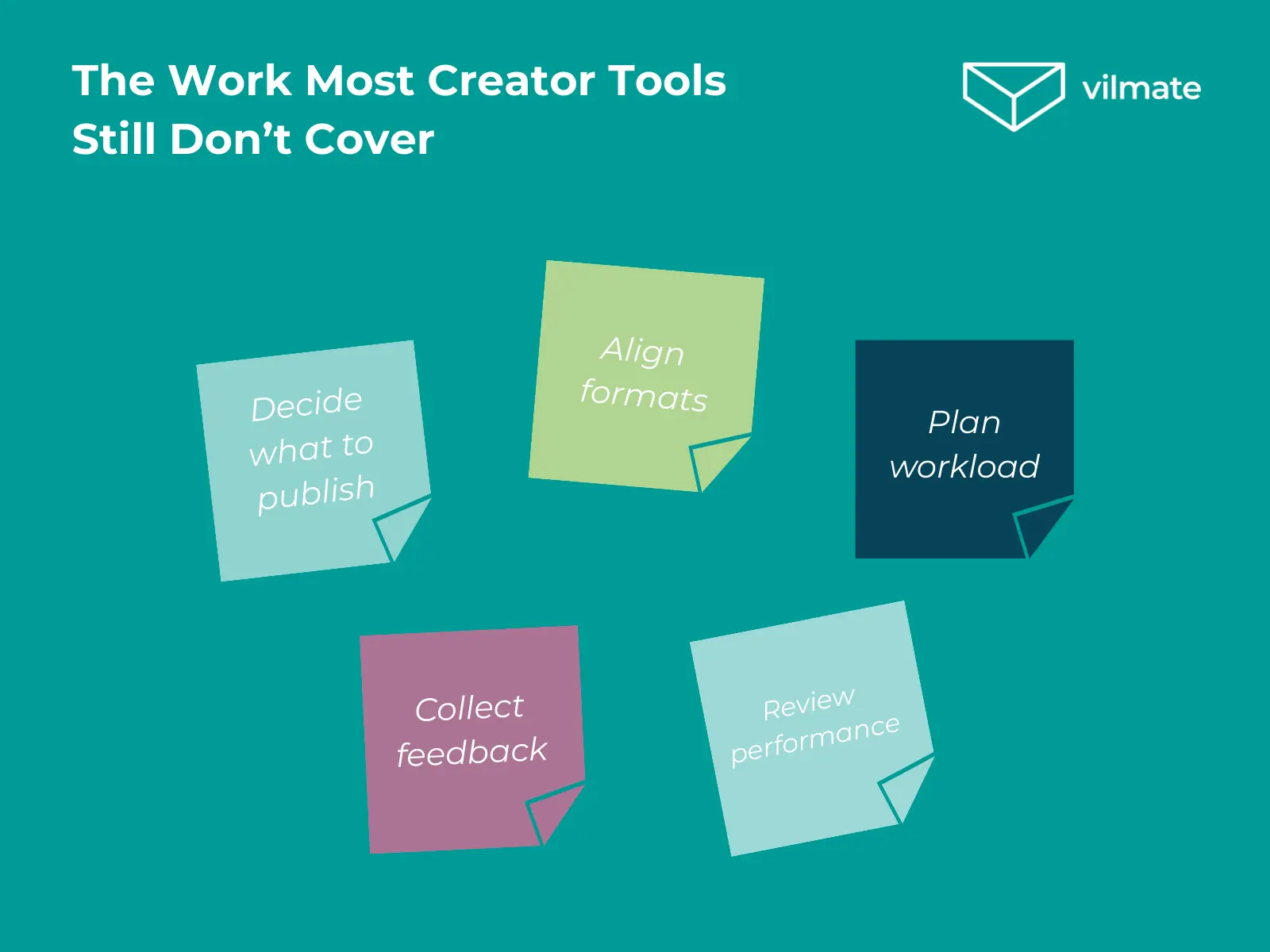
At the same time, there are still parts of creator work that most tools barely touch. These gaps don’t look like prominent “features”, but they create constant friction in everyday workflows.
Creators still rely on manual effort when it comes to:
- deciding what to keep, cut, or publish between drafts
- maintaining consistency across formats and platforms
- planning realistic workloads instead of just scheduling posts
- coordinating feedback and revisions with collaborators
- turning performance data into clear following actions
Tools that manage to absorb even part of this work have a much higher chance of sticking because they reduce the effort creators deal with every day, not just during production.
AI matters here, but not as a selling point. On its own, AI doesn’t earn a place in the workflow. It only helps when it reduces complexity, decisions, or manual steps.
The bar is high and straightforward at the same time.
If a tool doesn’t make everyday work noticeably easier, it won’t stay.
The Real Challenge in Building Creator Tools
For founders, the opportunity in creator tools is real — but it’s easy to misjudge where the actual risk sits.
Creators already use AI and already pay for software. The hard part is not convincing them to try something new. The hard part is making the product earn a permanent place in their daily workflow. A tool doesn’t need to fail technically to lose adoption. It only needs to feel heavier than the alternative.
This shifts the core question founders face. It’s no longer “Can we build this AI feature?” but “Will creators rely on it without thinking about how it works?”
In creator tools, AI rarely succeeds as a visible selling point. It succeeds when it disappears into the product. When creators don’t have to operate prompts, manage modes, or second-guess outcomes, AI turns from a feature into infrastructure.
That’s where most execution risk lives. Not in model choice, but in product behavior: defaults, context, recovery, and how AI fits into real workflows used every day.
This is the type of challenge Vilmate works on with founders building AI-driven creator tools and platforms — especially when AI is central to the product, but creators shouldn’t have to think about it at all.