Inside AI for Creators: Real Workflows, Real Needs, Real Product Opportunities
articlesartificial intelligenceThe creator economy keeps growing, and many product teams are now exploring AI for creators as a direction worth pursuing. It’s not just a trend. Creators work fast, experiment often, and switch between formats constantly – which makes them one of the most responsive audiences for new digital tools.
AI fits this environment well. It doesn’t replace creative thinking, but it supports the parts that slow creators down: repetitive edits, versioning, formatting, and everything that happens before an idea becomes publishable. Tools with AI-powered video editing, image generation, design suggestions, or assisted music production give creators a shorter path from draft to finished work. As a result, interest in reliable AI-driven products continues to grow.
Another shift is happening around monetization. Faster production creates more room to experiment with formats, publish across additional channels, and work with branded content without extra shoots. For teams building products in this space, it’s a clear signal: creators look for tools that save time and help them earn more from what they already produce.
Our work at Vilmate includes building an AI tool for this audience, so we’ve seen how creators adopt such technologies in real workflows. Sound engineering doesn’t replace their craft – it gives them room to do more.
In this article, we look at how AI shapes different parts of the creative workflow and where founder teams can find the strongest opportunities for new solutions in this market.
Why creators are the ideal early adopters for AI tools
Creators tend to adopt new technology faster than most industries. Their workflows depend on quick iterations, flexible formats, and tools that remove friction. When something helps them work faster, the benefit becomes noticeable right away.
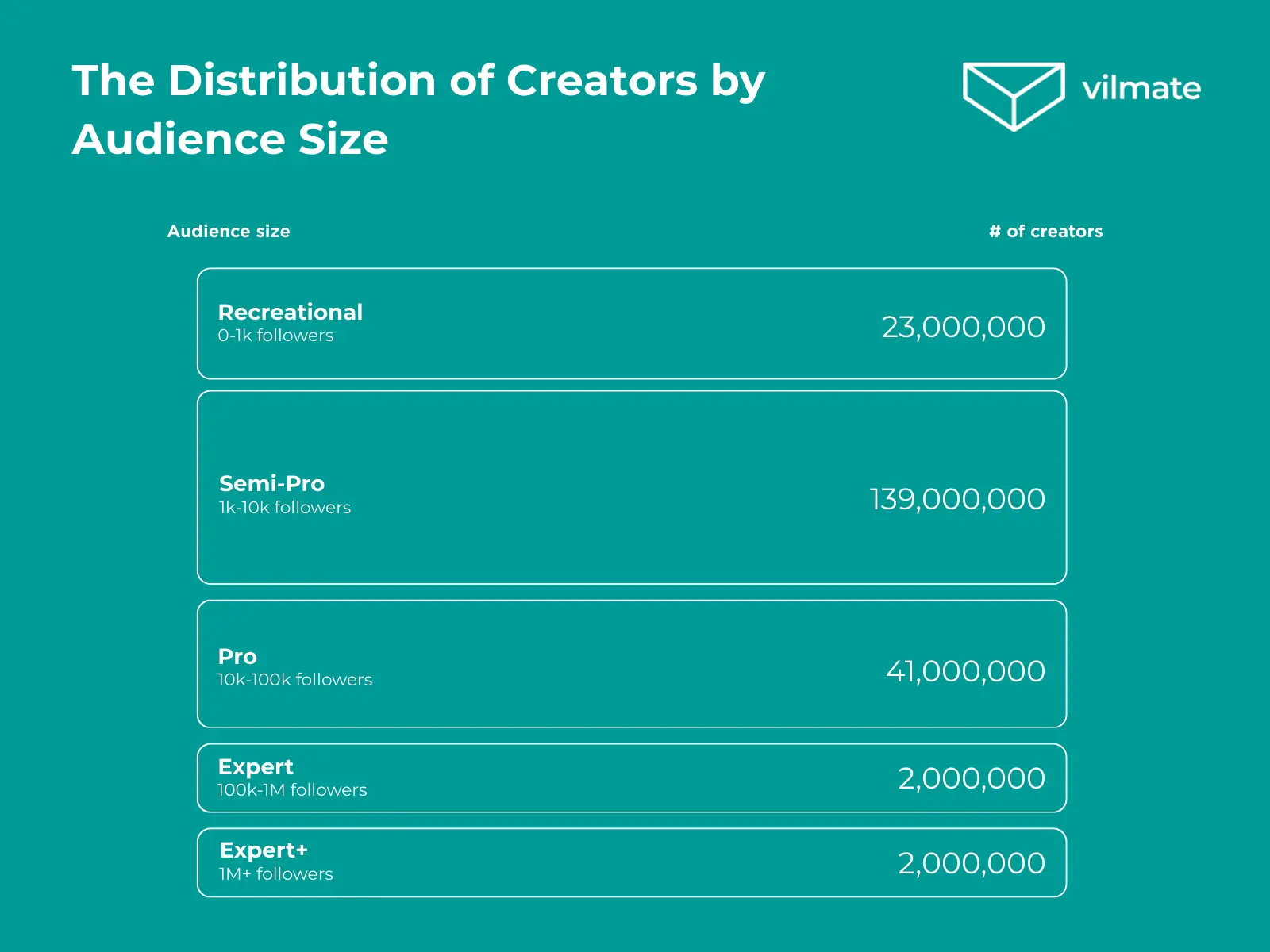
The size of this audience also matters. According to Linktree, the global creator ecosystem includes over 200 million people, and a significant share of them publish regularly across multiple platforms. With a population this large and active, even small workflow improvements can reach users who experiment early and adopt quickly.
Many content specialists already work with modern AI tools for creators when they need quick edits, variations, or routine cleanup. These users notice small speed improvements, and that often changes how often they publish and which platforms they cover.
At the same time, most existing tools are still far from complete. Many important needs remain uncovered, and large parts of the creator workflow still lack reliable AI support. The market is young, the technology is moving quickly, and there is plenty of space for more focused products. Even if a similar tool already exists, a competitor with better UX, stability, or a more thoughtful feature set still has room to grow – we are still early in this cycle.
For product teams, that combination means a rare window of opportunity. Creators provide fast feedback, are willing to try new tools, and tend to stay with solutions that reliably reduce routine work.
In this context, it becomes easier to see where the strongest opportunities lie within specific creative media.
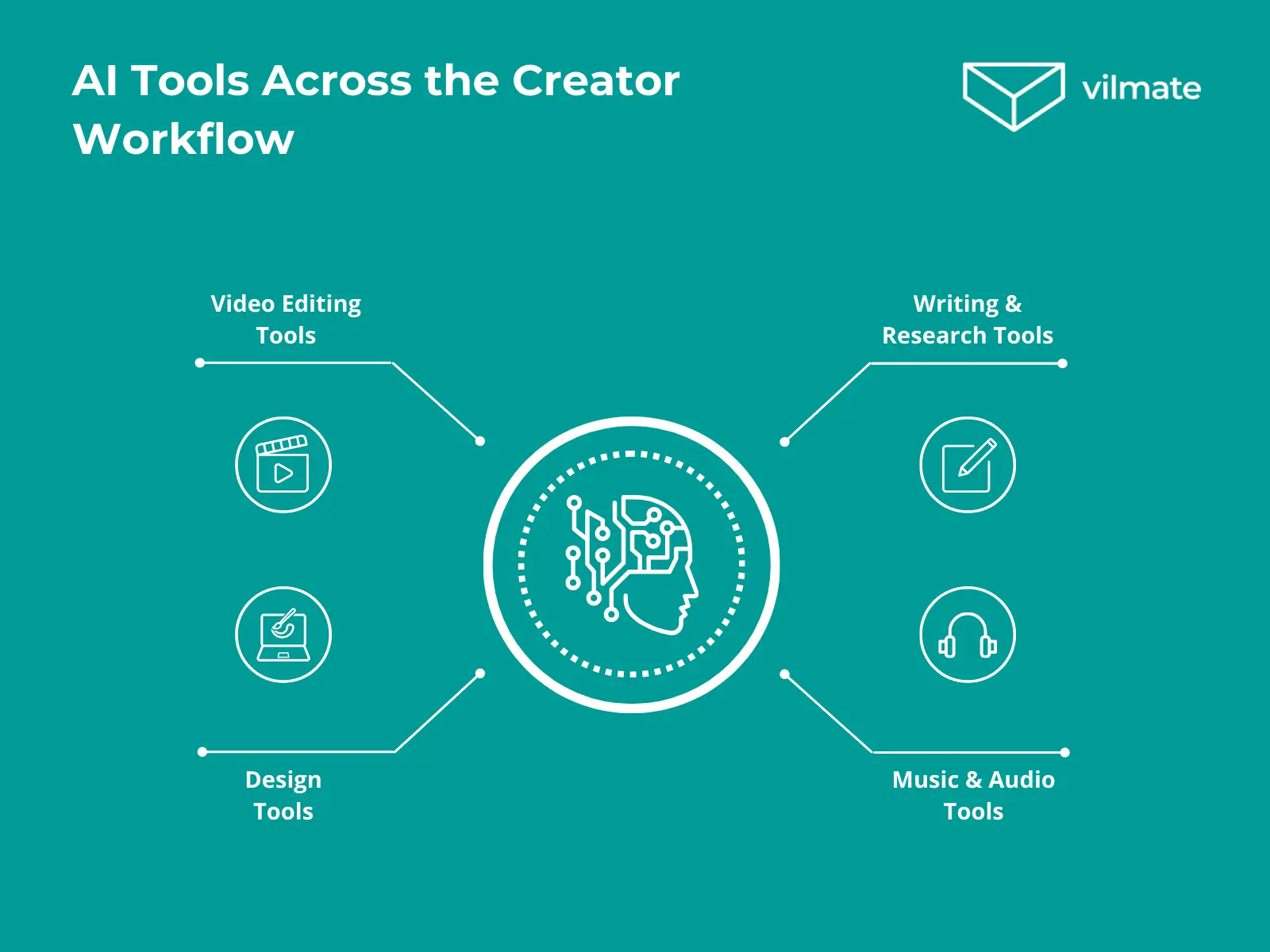
AI in video editing tools
Video is one of the most demanding parts of the creator workflow, and many modern AI video editing tools already help with the most time-consuming tasks. Creators often use:
- Descript – text-based editing, removing filler words, and quick transcription.
- Runway – background removal, motion tracking, and AI-generated shots.
- Kapwing – fast resizing and formatting for TikTok, Reels, and Shorts.
- Premiere Pro (AI features) – auto-captioning, color matching, and smart reframing.
These products speed up routine steps, but the wider workflow still has a lot of uncovered ground. Most tools focus on single features rather than the real problems creators face every day.
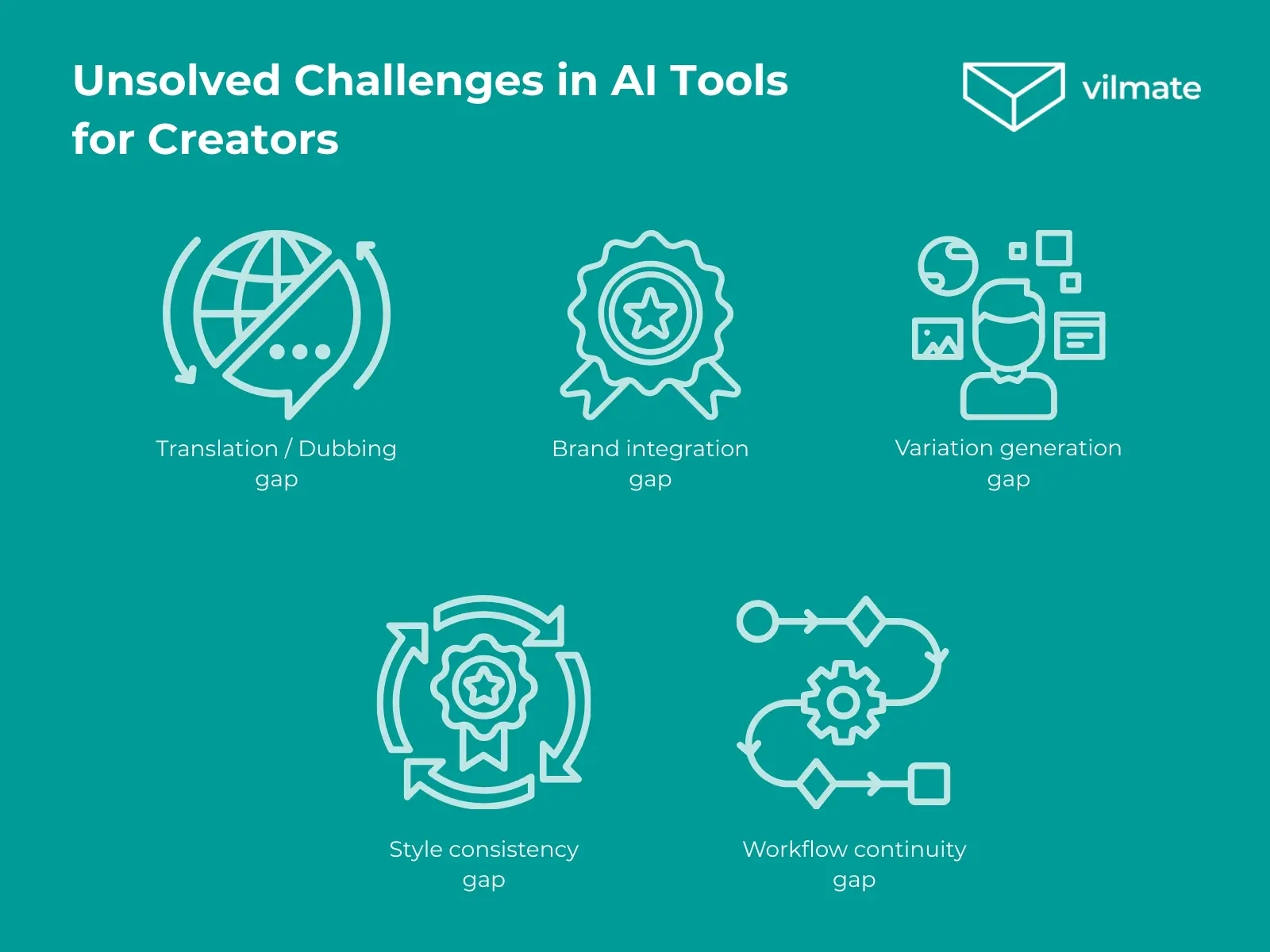
Several gaps remain noticeable:
- lack of reliable AI translation and dubbing for creators who publish in multiple languages;
- limited tools for generating several variations of one clip for ads or split-testing;
- weak support for branded elements added in post-production without reshooting;
- few solutions that understand a creator’s visual style and offer consistent suggestions;
- almost no end-to-end tools that connect editing → versioning → platform delivery.
This is where product teams still have room to build something meaningful. The market is growing rapidly, yet many vital needs remain unaddressed.
One of the uncovered areas we explored at Vilmate involved working with video assets in post-production. This workflow helped creators add new elements to existing footage instead of recording more content. The pattern became clear: when an AI feature solves a real pain point that no one else covers, adoption happens quickly.
For teams designing AI tools for video creators, these gaps represent practical product opportunities. Creators move fast, test new features early, and stay with tools that remove friction from their process — especially when those tools help them earn more from the same video.
AI in image generation and design tools
AI changed how creators explore visual ideas, but it didn’t remove the messy part of the process. Many projects still begin with quick sketches, tests, or early concepts, and tools like Midjourney, DALL·E 3, or Stable Diffusion help move through this stage faster. They’re great for generating possibilities – and sometimes too many of them – which is why creators need control just as much as they need speed.
Even with strong growth in AI image generation tools, most products still stop at the first output. They create a single image, but very few support the way creators actually work. A real workflow often requires several coordinated visuals, a consistent character, or branded assets that look like they belong to the same project. Most tools can’t do that yet.
Several gaps continue to stand out:
- keeping style consistent across multiple outputs;
- generating layered, editable files that designers can refine;
- supporting brand systems instead of one-off prompts;
- creating multiple formats automatically from one idea;
- teaching the model to follow a creator’s existing visual language.
For teams building AI creator tools or developing broader AI for creators platforms, these gaps translate into clear product opportunities. The market still lacks tools that help creators stay consistent – not just creative – and products built with that focus often gain traction quickly.
AI writing and research tools for creators
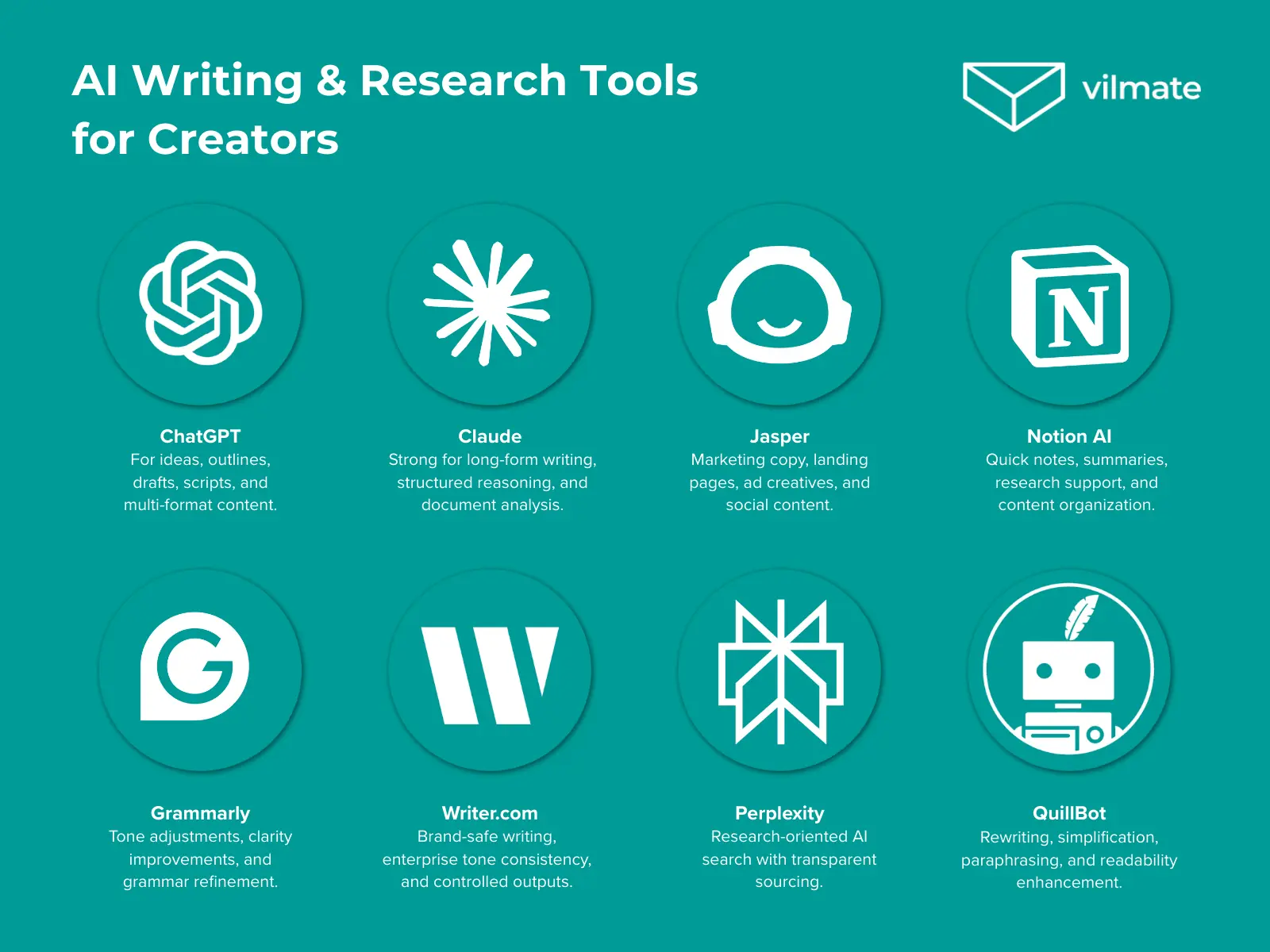
Writing tools were among the first to show how useful AI can be for creators. Drafting, outlining, and quick research now take minutes instead of hours, which is why many creators rely on solutions like:
- ChatGPT / Claude – flexible drafting and idea exploration;
- Jasper – template-based marketing content;
- Notion AI – summaries, rewrite options, and note cleanup;
- Grammarly (AI features) – tone adjustments and clarity suggestions.
These tools help with early steps, but the bigger workflow is still messy. A creator might start with an idea, then research sources, rewrite the draft for a different audience, prepare short versions for social channels, and keep tone consistent across all of it. Most existing products focus on generation rather than the full process.
Several important gaps keep showing up:
- no reliable, creator-friendly fact checking;
- limited support for maintaining a stable voice across long-form writing;
- weak tools for turning one draft into platform-specific variations;
- lack of assistants that help track sources, references, and accuracy;
- almost no systems that learn a creator’s existing style instead of pushing their own.
For product teams, these gaps open clear opportunities. Creators want fewer tabs, fewer tools, and fewer places where style can break. A writing assistant that handles structure, supports research, and keeps the author’s voice consistent would cover needs most products still ignore.
This is a space where strong, practical AI engineering quickly stands out. The tools that understand real writing workflows – not just prompt-to-paragraph generation – have the best chance to become part of daily work.
AI in music and audio tools for creators
Music and audio tasks remain some of the most complex parts of the creator workflow. Even experienced creators spend hours polishing sound, cleaning recordings, or matching timing to visuals. That’s why AI tools for music creators are becoming more common – they give creators a faster way to reach a usable draft.
Tools like Adobe Podcast AI, LALAL.AI, AIVA, and Soundraw cover early needs such as noise removal, voice cleanup, isolated stems, or quick melody generation. They’re helpful for exploration, but they don’t come close to supporting the full audio workflow.
Several challenges in music creation remain almost untouched:
- AI struggles with musical context – knowing when energy should rise, fall, or match visual pacing;
- no reliable tools for adaptive music, where timing adjusts automatically to video edits;
- limited support for multi-track workflows, leaving creators stuck with flat mixdowns;
- no strong way to keep a creator’s sound identity consistent across projects;
- weak tooling around licensing, attribution, and provenance for AI-generated audio;
- little help for podcasters who need intelligent dialogue editing, not just noise reduction.
These gaps are specific to audio and represent real product opportunities. The bar for acceptable sound is high, and creators notice quality improvements immediately. A tool that helps them stay consistent, adapt music to visuals quickly, or manage licensing risk has a strong chance of early adoption.
Teams building for audio can win by solving the parts of the workflow that still require too much time and too many tools. Strong engineering here stands out fast.
Why it’s worth building AI for creators
Building AI for creators is attractive not only because the audience is large, but also because creators behave in ways that accelerate and clarify product development. They experiment often, give rapid feedback, and adopt new solutions as soon as they help reduce friction. For product teams, this shortens validation cycles and reveals which features matter long before a broader rollout.
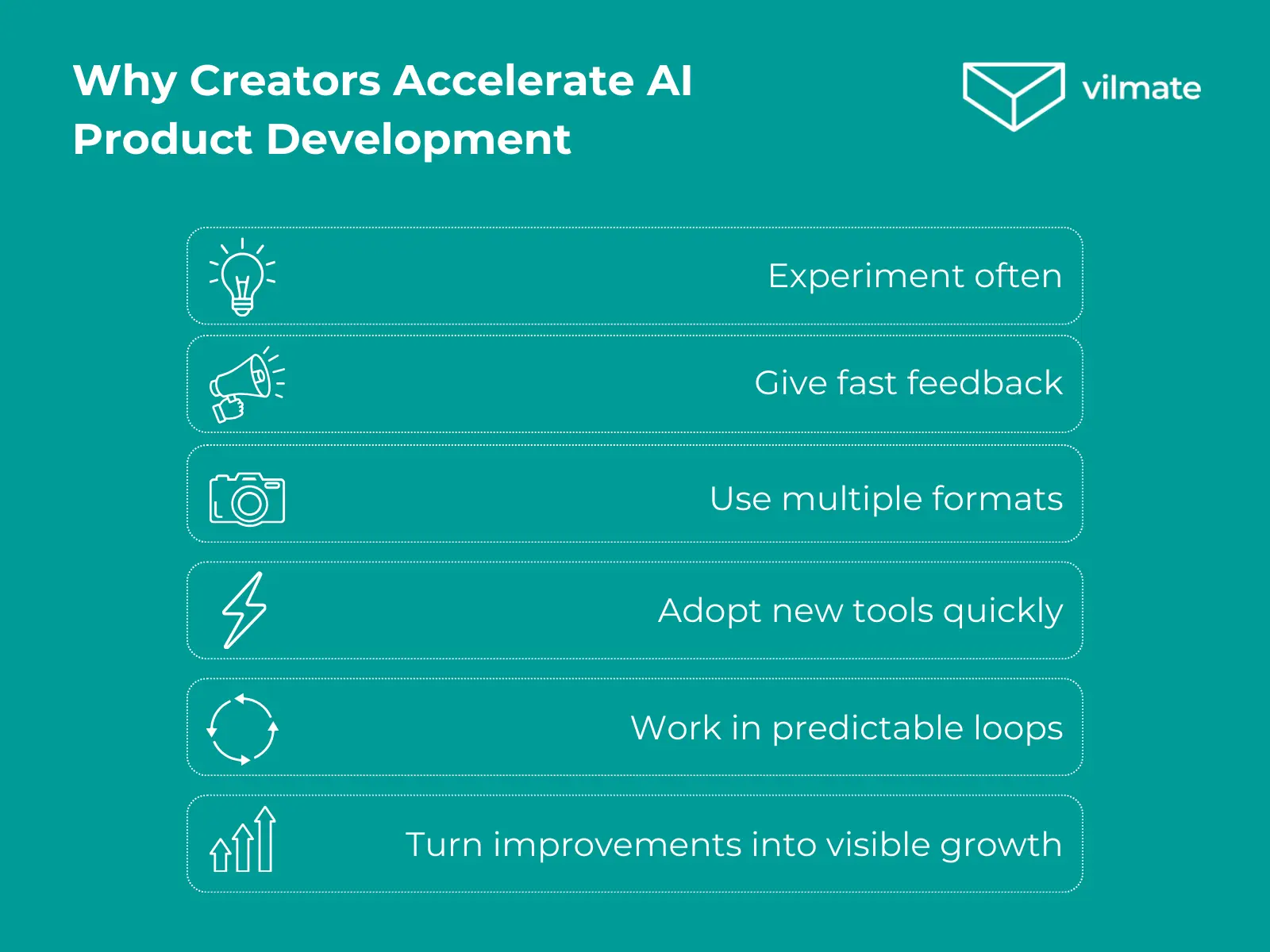
Creators work across multiple formats – video, writing, audio, and design – which gives AI tools many natural entry points. A product doesn’t need to cover the entire workflow to deliver value. Solving one recurring pain point can be enough to earn early traction.
Another benefit is predictability. Creator workflows repeat from project to project, which makes it easier to spot patterns and design features around them. Good tooling quickly becomes part of the daily routine, and retention tends to grow once a creator relies on the same workflow for every piece of content.
For teams exploring AI products, creators offer something rare: a motivated audience that immediately feels the impact of better tools.
With these patterns in mind, it becomes easier to see how founders can turn AI for creators into a sustainable business. Let’s look at where monetization naturally appears.
Revenue opportunities for founders building AI for creators
For founders, one of the strongest reasons to build AI for creators is the clarity of monetization. The market itself is already substantial – according to research, the creator economy reached 205.25 billion USD in 2024. A market of this size responds quickly when a tool helps creators save time or unlock new revenue. That makes monetization models easier to validate and scale.
AI products in this space typically grow through a mix of models:
- subscriptions that follow the creator’s recurring workflow;
- usage-based pricing for features that require heavier AI processing;
- tiered plans separating individual creators, teams, and agencies;
- paid add-ons for premium outputs like localized versions or branded variations;
- revenue-sharing for tools that directly enable commercial assets;
- team licenses for studios managing shared libraries and consistent styles.
Monetization in the creator economy works because value is visible. When an AI tool helps creators publish more, reduce production time, or open new income channels, willingness to pay emerges quickly. And as workflows repeat from project to project, retention tends to follow naturally.
Conclusion
The interest in AI for creators keeps growing, but the real opportunity lies in understanding how creators actually work. Their workflows repeat, their timelines move fast, and they adopt new tools the moment those tools remove friction. That’s why products in this space scale quickly when they solve practical, everyday problems.
Our experience at Vilmate confirms this. We’ve built AI solutions for the creator market and seen that adoption depends strongly on two factors: reliability and workflow fit. When an AI feature helps creators produce more from the assets they already have, the value becomes visible right away. Good engineering doesn’t replace creativity. It amplifies it.
For founders, the next wave of successful products will come from teams that focus on consistency, automation, and the parts of the process creators still handle manually. Those who build with real workflows in mind will shape the next generation of tools in this market.