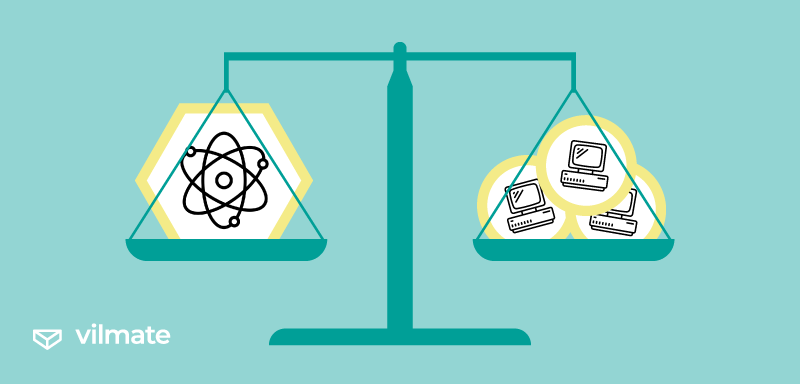
The modern IT industry covers a fair share of human needs. Or not? When it comes to handling molecular structures, for instance, a standard computer isn’t the best helper.
Time to talk about supercomputers and quantum computing. While quantum computing is a kind of magic for many users, this is the most relevant trend for large corporations. And Google experts have already spoken about the future total superiority of supercomputers.
Moreover, 2023 could be the year of a significant breakthrough in the industry. This year (or a bit later), the world may witness the first commercial model of a quantum computer. So let’s briefly discuss the technology before it’s too late:)
This text will cover the concepts of supercomputers and quantum computing and discuss the opinions of IT specialists. We will also try to set the point why the world needs quantum computing and when to expect it as commonplace.
What supercomputers are and how they are applied in the modern world
Before diving into the world of supercomputers, let’s examine several foundations they rely on.
A quantum computer uses the basics of quantum mechanics in its calculations:
Quantum superposition. A phenomenon is familiar to many from Schrödinger’s thought experiment. Schrodinger’s cat is in two positions at the same time: both alive and dead. Maybe such an experiment is absurd for cats but nothing is impossible for elementary particles. They can be in two places simultaneously, rotate in both directions simultaneously, be reflected and absorbed simultaneously, and so on. Particle actions are mutually exclusive, and superposition is a state in between two activities. And the only option to stop this mess is to provide an observer at a certain point.
Quantum entanglement. A phenomenon where the quantum states of objects depend on each other. For example, in interacting groups of photons, the state of one particle will directly affect the state of another.
Both concepts are complex enough to drive off some scientists from wanting to work with quantum mechanics. Not talking about a simple blog post. But we’ll do our best not to overcomplicate the things that are already far from ordinary.
The task of a quantum computer is to perform parallel calculations to ‘try all paths at the same time.’ In general, the supercomputer will work based on the principle of superposition, and quantum entanglement will help solve problems on a larger scale.
You’ve already seen this in the ‘Avengers: Infinity War’ movie when Dr. Strange saw 14,000,605 futures to find the best battle scenario. Does this mean that Dr. Strange has the capacity of a supercomputer? Probably, yes.
A brief history of supercomputers
The concept of supercomputing came about thanks to Richard Feynman and Paul Benioff.
In 1980, Benioff came up with a quantum mechanical model of the Turing machine. Feynman expanded the thought to the idea of a full-fledged quantum computer. Eventually Benioff brought out the first theoretical foundations.
IBM introduced their first supercomputer in 2001. So far, IBM is the most successful developer of quantum computers, as well as the primary expert in the quantum computing field. Intel, Microsoft, Google, and about 400 other IT companies are also involved in quantum development.
Nowadays, to access existing quantum processors or simulators, you must be granted a special membership. Or you can buy the technology if you have a spare couple of hundreds of million of dollars.
However, the almighty Internet is not only for watching funny-cats videos. You can access open-source quantum tools through GitHub.
What are qubits?
An ordinary computer uses bits for calculations. The supercomputer operates with qubits. Qubits can be in several states simultaneously; that’s where they use the concept of superpositions we’ve mentioned earlier.
Qubits can consist of trapped ions, photons, and quasiparticles. Defects in the crystal lattice, natural or artificial atoms, can also be qubits. But the most popular and promising are superconducting qubits based on Josephson junctions.
A Josephson contact is two superconductors separated by a thin (10-7 cm) dielectric layer. IBM and Intel based their processors on such qubits that hold a lot more data than a plain bit.
You can endow a computer with millions of bits, but supercomputers operate on a small number of qubits. Though the progress and development never stops. In 2001, IBM introduced the first 7-qubit quantum computer and in 2022, the Osprey processor from IBM already had 433 qubits.
How a supercomputer works
The physical assembly of a supercomputer can be divided into three main parts:
An ordinary computer that will send instructions to qubits.
A signaling method that will transform information.
Storage for qubits capable of stabilizing them.
For stable operation of the system, it’s vital to isolate the qubits from external influences as much as possible. Therefore, the design of a supercomputer must contain elements of deep cooling and protection against external interference. Cooling is carried out up to cryogenic temperatures – up to 0.015 K.
Protection from interference is one of the most challenging tasks being solved today. Another big problem is ensuring high measurement accuracy.
For the qubits to be in superposition, specialists must manipulate them using lasers or microwave beams. So currently we have quite a rough idea of how supercomputers really work under the hood.
And now it’s time to talk about what you can do with supercomputers.
Quantum computing: languages, services, and fields of application
Quantum computing is similar to usual programming but using supercomputers. Quantum computing allows you to work with quantum algorithms with the help of high-level structures.
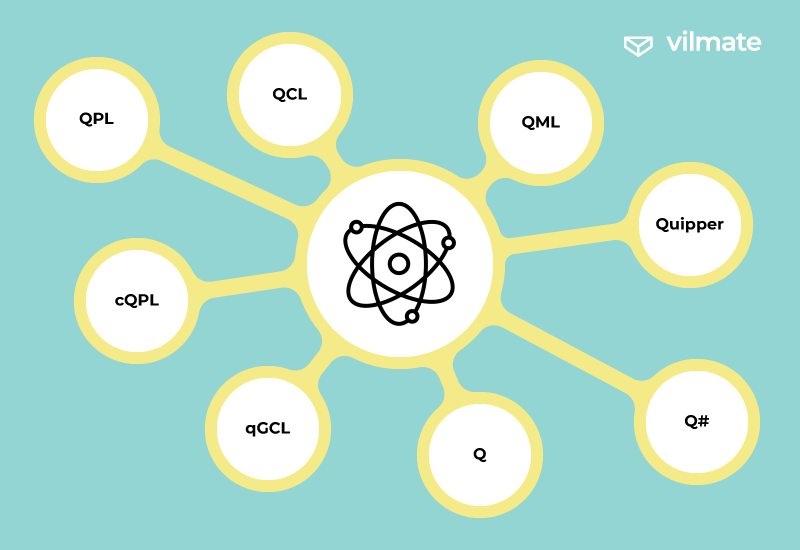
There are several particular languages that one can use to make quantum computing possible:
QPL
QCL
QML
Quipper
Q#
Q
qGCL
cQPL
One of the most used quantum programming languages is OpenQASM by IBM. All thanks to IBM providing ordinary users with the broadest quantum computing experience.
Quantum computing for everyone from IBM
IBM Quantum Composer is an online platform that provides access to cloud-based quantum computing. There are two levels of access to the platform: public and premium. The online platform gives access to a set of early IBM quantum processors and tutorials.
The platform interface offers users a quantum circuit calculation model. A quantum circuit can be both graphical and software. You can create circuits using Qiskit tools for them further to be compiled in OpenQASM (quantum programming language) and executed on actual supercomputers.
Qiskit is a software development tool for supercomputing. Qiskit is open source and works at the level of impulses, algorithms, and circuits. The basic version of the tool uses Python.
Why do we need quantum computing?
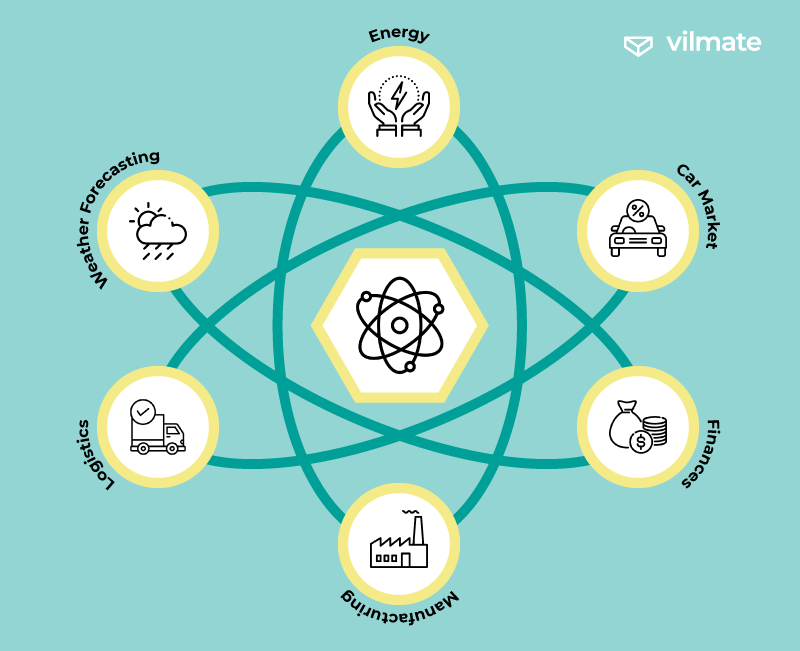
We have roughly figured out what a quantum computer is and how it works. Let’s see the areas where it can be helpful.
Energy. Microsoft has been working on energy optimization through quantum computing since 2020. The company will implement developments in power and water supply management in Dubai.
Car market. Google and Volkswagen are working on the use of quantum computing. The application of supercomputers is supposed to optimize and simplify production. For example, the choice of primer for a certain paint should become much easier for specialists.
Weather forecasts. IBM uses supercomputers to make accurate weather forecasts. That’s why Apple, Amazon, Facebook, and Google use the company’s services.
Financial market. Quantum computing can significantly simplify the forecasting of financial markets and improve the optimization of stock management. And since 2022, IBM and PayPal have collaborated to detect fraudsters using quantum computing.
Logistics. DWave and Toyota have found that quantum research is highly effective at traffic optimization. All thanks to incredibly accurate forecasting.
Manufacturing. Batteries, chips, and cars can be smaller and more durable when you understand their vulnerabilities. A supercomputer will do just fine with this.
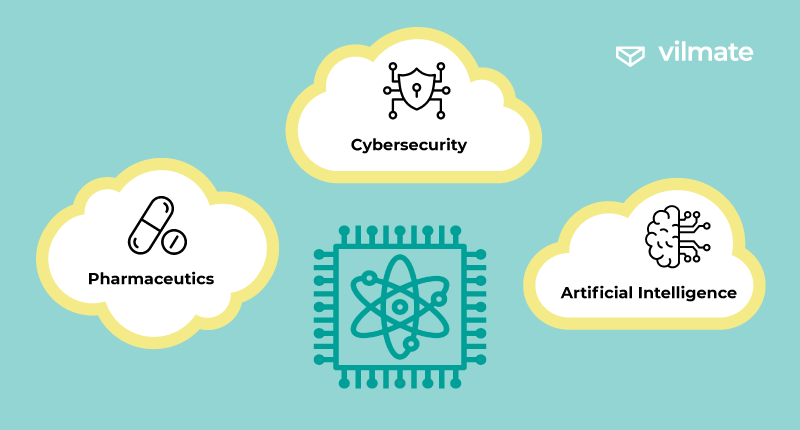
These are just small projects that companies use to experiment with new features. But we are also interested in broader applications. Therefore, we present to you the Top 3 areas where supercomputers are likely to dominate in the future.
Promising areas for quantum computing
Pharmaceutics.Supercomputers can perform calculations at the molecular level. Therefore, scientists hope that quantum computers can simulate the interaction of molecules and predict chemical reactions. Well, because they are quantum.Thus, with the help of quantum computing, we’ll be able to:
predict drug interactions
analyze genetic data (maybe a supercomputer will be the solution for cancer treatment!)
test new drugs
research medicines (and, therefore, to speed up and reduce the cost of releasing new drugs).
In theory, a supercomputer can accurately simulate biological and chemical processes. Thanks to this, we can expect a breakthrough in medicine.
Cybersecurity.A quantum computer is capable of factoring numbers into prime factors exceptionally quickly. Therefore, with the help of quantum computing, one can decrypt messages encrypted with the RSA algorithm.Nowadays, the algorithm is still considered very reliable since a classical computer can’t quickly cope with such tasks. That’s why getting the data from your credit card is highly unlikely.But a quantum computer can easily handle such a task thanks to Shor’s algorithm. For example, in December 2022, Chinese scientists announced the first-ever cracking of a 48-bit key.Does this mean that a supercomputer can make you a supervillain? Sure, if you feel like it (but DON’T!). That’s only one of the challenges quantum computing RSA encryption crack puts in front of humanity.At the same time, it is also the supercomputer that sets a new trend in cybersecurity. Thanks to quantum encryption, you can secure your data so that no one will ever get access to it. It’s a common truth that any invention is initially neutral, only the further use makes it good or evil.
Artificial intelligenceA quantum computer can manipulate large amounts of data. Therefore, with the help of a supercomputer, it is possible to create neural networks of unprecedented scale. Google has been doing quantum AI research since 2013.You may have noticed to what extent neural networks have grown in recent years. A quantum computer will be able to cope with one of the tasks facing artificial intelligence – to imitate the biological processes of the human brain.But there is one problem: specialists must deal with quantum artificial intelligence from scratch. Experts say modern developments made on conventional computers cannot be transferred to quantum computing.
What is the fundamental difference between ordinary and quantum computing?
So now that we’ve talked about supercomputers and quantum computing, it’s time to take stock. Classical computers vs. supercomputers: what’s the difference?
Bits vs. qubits.Conventional computers use a binary code – 0 and 1, which indicate the state of on and off. Quantum computers use qubits. Qubits are ‘Schrödinger bits’ that are on and off at the same time, meaning both ‘true’ and ‘false’.A classical computer processes data sequentially and returns a single result. Quantum computing creates multidimensional computing spaces. Therefore, supercomputers are subject to more complex calculations.Qubits use superposition (simultaneous states) and entanglement (mutual dependence, thereby speeding up processes). Qubits can use several results of calculations at once in the analysis.
Power of computers and supercomputers.Classical computers run on logic and algebra. The more transistors there are, the more power it has. The ability of a quantum computer depends on the number of qubits.
The use of computers and supercomputers.Classical computers are commonplace. We use computers daily, under normal conditions: at home, in the office, in a cafe, etc. However, under heavy loads, even a good computer can overheat.Supercomputers are incredibly complex. And they are much more sensitive to temperature. Some quantum computers are capable of operating at room temperature. But some sophisticated supercomputers must provide absolute zero -273.15 degrees Celsius or -459.67 Fahrenheit.The specific conditions are due to qubits’ sensitivity to mechanical and thermal influences. Failure to comply with the requirements may cause errors in the calculations.
Capabilities of computers and supercomputers.If you’re reading this article, you probably know the basic operations standard computers can perform. Supercomputers are on a far greater scale.Earlier, we talked in detail about the application of quantum computing. These are molecular calculations, prediction of events according to the Probability Theory, and fast factorization. A standard computer is not capable of such operations.Quantum computing has the potential to take research and, in the future, user experience to a whole new level.
How close are we to the next stage of the technical revolution?
We are close enough and, at the same time, very far from the technical revolution that quantum computing will give us. Ironically, this is our superposition in the field of IT technologies.
Scientists face many problems associated with the creation of commercial supercomputers. Let’s take a look at the classic myths about quantum computing.
Supercomputers work only at low temperatures.We’ve already mentioned that some supercomputers can only work at absolute zero. For many years, this problem has been the main argument of skeptics. But Quantum Brilliance has already solved the problem: the company has developed the first supercomputer that works at room temperature.
Limited access for developers.A quantum computer, and therefore quantum computing, can only be afforded by wealthy companies today. However, you can try quantum computing today thanks to IBM’s cloud platform, an open-source tool, and existing languages.
Quantum computing is only for scientists.Of course, quantum computing makes a huge benefit for researchers in the first place. But we must not forget how soon we may need quantum encryption. We have already talked about a study by Chinese programmers who managed to crack a 48-bit key in a short time in December 2022. Do you still think that quantum encryption will not be helpful to us? Or threatening?
Quantum computers are not powerful enough.The power of quantum computers depends on the number of qubits. In 2001, the supercomputer only had 7 qubits. In 2018, John Preskill coined the term ‘Noisy intermediate-scale quantum era’ to characterize the state of supercomputing. Quantum processors are ‘noisy’ or sensitive to the environment, and many supercomputers cannot continuously correct errors. In 2019, Google’s demonstration of a quantum computer was unsuccessful. The supercomputer showed 99% noise and 1% signal.The noisy intermediate-scale quantum era is generally characteristic of supercomputers with 50–100 qubits. Such computers are not capable of achieving quantum supremacy. But this stage is passed.In 2020, Chinese scientists claimed that their supercomputer achieved quantum supremacy and performed Gaussian boson sampling in 200 seconds, while a conventional computer could do this task in about 2 billion years. In 2022, IBM introduced a processor with 433 qubits and promised to reach 1000 qubits by 2023.
The main problems of quantum computing
What can be called the real insurmountable disadvantages of quantum computing? Of course, the enormous cost of quantum computing and the lack of programmers willing to do quantum computing today.
The high cost of using supercomputers lies in the high power consumption. In the 1990s, the best quantum machines consumed about 100 kilowatts. In the 2010s, the best supercomputers already required about 2 megawatts of electricity. The cost of one megawatt of electricity in 2010 was approximately $1,000,000.
Therefore, supercomputers had to be modified. To achieve this, programmers have developed unique operating systems that can reduce electricity consumption. The more powerful supercomputers became, the more electricity they needed.
The total shortage and the huge cost of operation contributed to the creation of supercomputer centers. Such centers have opened in the USA, Germany, and Japan. And then the European Union launched its own infrastructure.
A characteristic invention was a zero-emission supercomputer technology developed by Icelandic scientists in Reykjavik. A cold climate played a significant role in the creation by making it possible to reduce active cooling. Also, the supercomputer used renewable energy rather than fossil fuels.
In addition to being expensive to operate, supercomputers are also challenging to finance. In 2010, an investment of 50 million euros covered only the top 10 quantum machines.
How close are you to quantum computing?
The transition from conventional computers to supercomputers equals the transition from candles to electricity. When will the revolution happen? No one knows. Experts talk about the frame of 5 to 50 years.
When should you start practicing quantum programming? Today. We have some resources for this. The more specialists come to the field, the faster it develops. At least we know for sure that this topic is unlikely to fade in the near future.
The role supercomputers have played in our lives so far
People have been collaborating with the supercomputer for a long time. Therefore, we can give several examples of how quantum computing has been flowing into our lives for decades.
1970s. The Cray-1 supercomputer began to help scientists predict the weather and conduct aerodynamic research.
1980s. Quantum computing of CDC Cyber supercomputers made it possible to simulate radiation protection and perform probabilistic analysis.
1990s. EFF DES cracker (nicknamed “Deep Crack”) was the machine that carried out brute force code breaking.
2000s. With the help of supercomputers, experts conducted the first 3D modeling of nuclear tests.
2010s. The Tianhe-1A supercomputer made it possible to modulate molecular dynamics. Experts use this supercomputer for oil exploration and aircraft design.
IBM’s Blue Gene/P computer created a neural network twice as complex as a mouse brain. The neural network was the equivalent of 1% of the human cortex, containing 1.6 billion neurons with trillions of connections.
In 2020, supercomputers have helped scientists and the whole world. With the help of quantum computing, scientists have obtained solutions that helped to reduce the spread of the COVID-19 virus during a pandemic.
Conclusion
Everyone can conclude the previous reasoning on their own. We’ll just briefly summarize our article.
How different are supercomputers from standard computers?
The difference between conventional computers and quantum machines is enormous. We are used to working with bits, while supercomputers operate with qubits in quantum superposition. Thanks to qubits, quantum computers can perform billions of operations and run much faster.
Is quantum computing promising?
Definitely yes. Quantum programming is the path to a new technological revolution comparable to the invention of electricity.
How can supercomputers help us?
In theory, the possibilities of supercomputers are endless. However, three promising areas are cybersecurity, pharmaceuticals, and artificial intelligence. In addition, supercomputers are already helping us predict events quite precisely.
What are the main problems of quantum computers?
The main problem is the cost of operation and lack of funding. Governments are adopting programs to invest in supercomputers, but not enough for rapid development.
Is quantum computing worth it today?
Learning quantum programming is a chance to be at the origins of incredible events. The topic is very complex, so studying it will take time. You can discover IBM Quantum Composer as a hobby to turn your skills into big money.
When to expect a breakthrough in the field of quantum technologies?
Unfortunately, experts cannot answer this question accurately. Someone expects a commercial supercomputer by 2023. Also, you can hear about terms from 5 to 50 years in the professional environment. Perhaps only a supercomputer can accurately predict this event.
Dont forget to check the rest of our site and find the right service for your projects. Stay tuned with Vilmate!
And remember that there are three types of people: 1)those who understand quantum computing; 2)those who do not understand quantum computing; 3)and those who both simultaneously do and do not understand quantum computing 🙂
AUTHOR BIO
Anastasiia Rezinkina
Copywriter / Content manager
Anastasiia is a content writer at Vilmate with a focus on e-commerce, AI, and emerging tech trends. She turns complex topics into clear, practical reads — whether it’s comparing CMS platforms or unpacking how AI is reshaping online retail.
Somewhere between a board meeting and an e-commerce roadmap, “we need AI” becomes a non-negotiable business requirement. The pressure is real. In Dataiku’s 2026 survey of 900 enterprise CEOs, 80% said their role could be at risk if their company failed to show measurable AI gains by year-end. These circumstances can move an AI project […]
By now, the case for personalized search in e-commerce has been made loudly enough. Vendors praise it, reports measure it, case studies add conversion lifts, and we have already covered the theory in our guide to e-commerce personalized search and the scenarios in e-commerce personalized search examples. So yes, the point has landed. Personalized search […]
Personalized search is easy to like in theory. Better results, smarter product discovery, more relevant buying journeys—all sound great. Also slightly abstract, until you see what can happen when a real shopper types a real query, and the store uses the context already sitting in front of it. Theory still matters. That is why we […]
Cookies help us see what's working on this site and make it better. Your call on what we track.
Functional
Always active
The technical storage or access is strictly necessary for the legitimate purpose of enabling the use of a specific service explicitly requested by the subscriber or user, or for the sole purpose of carrying out the transmission of a communication over an electronic communications network.
Preferences
The technical storage or access is necessary for the legitimate purpose of storing preferences that are not requested by the subscriber or user.
Statistics
The technical storage or access that is used exclusively for statistical purposes.The technical storage or access that is used exclusively for anonymous statistical purposes. Without a subpoena, voluntary compliance on the part of your Internet Service Provider, or additional records from a third party, information stored or retrieved for this purpose alone cannot usually be used to identify you.
Marketing
The technical storage or access is required to create user profiles to send advertising, or to track the user on a website or across several websites for similar marketing purposes.