Today, many people believe that neural networks will deprive people of their jobs. But don’t be quick to be scared; this is a common opinion that may not come true anytime soon. Today, we will discuss the possible disadvantages of artificial intelligence, particularly ChatGPT.
The capabilities of neural networks are already frightening people. It has reached a point where many reputable individuals in the IT industry have signed an open letter calling for the halt of ChatGPT development. Additionally, the design community has organized a protest against neural networks such as DALL-E and Midjorney.
Can neural networks put too many people out of work? Yes, they can. But which specialists can you replace with a neural network? We will determine it today.
While many people are discussing the benefits of new technologies, we will concentrate on the drawbacks. Let’s attempt to comprehend what neural networks cannot accomplish yet, and what factors might halt their progress.
Certainly, ChatGPT and other types of AI models are technological breakthroughs. Nonetheless, do all phenomena dubbed ‘revolutions’ ultimately become what they aim at?
3 failed revolutionary technologies, and… What about ChatGPT?
Experts label some technologies revolutionary, but this is not always accurate. A product may appear brand new and game-changing, but the demand turns out to be unforgivably low. Here are some of the most notable examples.
Google Glass
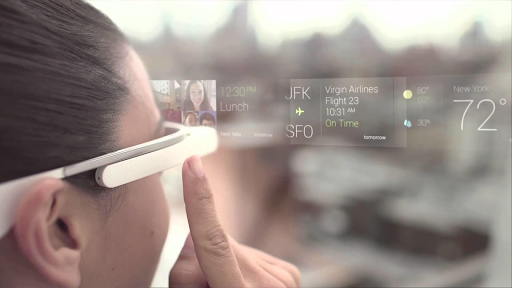
Google Glass, a wearable technology developed by Google, was introduced in 2012 and touted as a revolutionary device for augmented reality.
Despite generating a lot of buzz, the product also received numerous complaints:
The product implementation wasn’t as successful and feature-rich as anticipated.
The price of Google Glass was too high, and few people could afford such a device.
There were privacy and copyright concerns about the technology, as Glasses made it easier to record discrete videos.
As a result, Google abandoned the project. However, with the advancement of augmented reality technology, could the concept still become a revolution? Only time will tell.
Project Ara
Project Ara is a concept of a modular smartphone, also developed by Google. The idea was that users could assemble their phone like a kit, installing a camera module, a battery module, a display module, and all other necessary spare parts into the endoskeleton of the device.
In theory, users could choose the specifications of their smartphones independently. If they needed a better battery but didn’t prioritize the camera, they could pick the right parts and create the perfect smartphone. If they needed a better camera, they could purchase a better module.
This project appeared revolutionary for several reasons:
It would significantly reduce e-waste.
Users could experiment by adding various options, such as laser pointers, medical devices, and game controllers.
It would result in significant savings, allowing users to purchase spare parts at a low cost after the initial investment.
Users could adjust the functions of the phone to suit geographic conditions.
The concept does sound great. However, Google shut the project down in 2016, and here is why:
Competitors opposed the idea of an ‘eternal’ smartphone and impeded the development of the product.
The necessary technologies for implementing such a model weren’t yet available.
There was little demand for such a device among users.
Only a few geeks were interested in selecting the desired characteristics and engaging in customization. Regular users prefer to take their smartphone out of the box and start using it immediately.
Segway
People touted Segways as a replacement for cars in the city. Yes, this technology could have solved many problems with traffic, technology, and the general mobility of humanity. However, the project didn’t become revolutionary, despite Steve Jobs predictions of incredible success. He believed architects would design cities to make the Segway easier to move.
However, the device turned out to be too slow and inconvenient. Rather than replacing cars, the vehicle became just another form of entertainment. The owners sold the company in 2013.
Some technologies had a revolutionary impact for a short time but were eventually forced out of the market by more successful competitors. Facebook quickly supplanted MySpace. The more popular Apple Watch overtook the Pebble smartwatch. The search engine AltaVista disappeared due to the scale of Yahoo and, later, Google.
Some technologies failed to become revolutions in their time but are now being resurrected. QR codes, for example, appeared in 1994 but weren’t widely used because they required special software to scan them. Today, however, virtually every smartphone has a built-in QR code scanner, and the idea is being revived.
Virtual reality didn’t become very popular until the 1960s. At that time, specialists couldn’t fully realize the idea’s potential. However, these days, VR is gaining popularity again and showing promise.
What about ChatGPT and other neural networks?
They’re certainly a technological revolution, and artificial intelligence will likely be just as revolutionary as electricity was. Someday people will wonder how they ever managed without digital assistants. But when is it going to happen?
Several obstacles need to be overcome before the revolution takes place:
Ethical disputes related to religion, politics, and privacy
Concerns about professionals losing their jobs
Fears about the superpowers of artificial intelligence (yes, we’re talking about the rise of machines or something like that)
Imperfections in existing neural networks
Let’s delve into these imperfections further on, using ChatGPT as an example.
ChatGPT vs. human myths
The ChatGPT AI model is capable of impressive feats. It represents a vast collection of human knowledge, spanning thousands or even millions of topics. ChatGPT excels at parsing information. Give it a link to any text or thread; it can quickly extract and synthesize the key ideas into a coherent text.
However, there are still two common misconceptions about ChatGPT that we need to dispel. Let’s examine these myths and why they’re far from the actual reality.
1. ChatGPT is the perfect alternative to Google.
Many people believe ChatGPT is the best search engine out there, replacing other search engines, including Google. There are several reasons why this isn’t actually true at the moment.
ChatGPT doesn’t like to lose. The neural network is programmed to provide answers to questions posed to it. As artificial intelligence, it’s designed to achieve goals. Therefore, if ChatGPT cannot answer a question, it may ‘hallucinate’ and provide an answer that isn’t entirely accurate. In other words, ChatGPT can create plausible but nonsensical replies. When working with a neural network, verifying the provided information is essential.
ChatGPT isn’t 100% sure of its knowledge. If you are persistent enough or resort to deception, you will surely be able to convince the neural network that you are right.
ChatGPT was trained on massive databases, which can be both an advantage and a disadvantage. The thing is, information on different issues may vary depending on the source. Can the neural network select a trustworthy source? Artificial intelligence isn’t always able to distinguish truth from lies. Moreover, much depends on the context, and the neural network may not excel at understanding context.
ChatGPT is quite forgetful. If you continue communicating with artificial intelligence in one dialogue long enough, the neural network will begin to forget what you discussed earlier.
At present, ChatGPT is lagging in terms of up-to-date information. As of May 2023, the neural network’s knowledge is limited to events that occurred through 2021. If you ask ChatGPT about current events, you may receive irrelevant or outdated information or a standard response about the timeframe. Similarly, requesting a link to an article or statistics from a chatbot is more likely to be obsolete or broken due to the lag in the neural network’s database updates.
So, ChatGPT has quite a few shortcomings, but they’re not necessarily permanent. The neural network is constantly learning and improving with each update. Nonetheless, it’s currently best to double-check any information received from ChatGPT or, at the very least, to evaluate it critically. Artificial intelligence is much better at lengthy reasoning than providing bare facts.
2. ChatGPT will steal your job.
Is it a myth that we can breathe a sigh of relief about? Not really. The chatbot is capable of analytics, creating texts, generating code, and finding matches. However, we should consider that artificial intelligence is still at a beginner’s level in all matters. In addition, we have already discussed that the tendency to achieve goals consistently can lead to lying and nonsense.
Therefore, ChatGPT can be an excellent assistant for specialists, but it cannot replace them. The neural network will perfectly cope with the ‘dirty’ work that takes a fair share of the time. But you should always be the overseer who directs the work of artificial intelligence systems.
If your job involves writing text, you can’t solely rely on ChatGPT. By delegating the task entirely to the neural network, you risk receiving a non-unique text, complete gibberish, or an article filled with logical errors. To create text using ChatGPT, you need to gradually prompt it to reveal each idea, set the ‘tone of voice,’ and constantly fact-check the generated content. You will also need to remove redundancies and correct all the incorrect phrases. Furthermore, a neural network cannot be creative – it can only compile existing data. Therefore, a chatbot can assist copywriters, content managers, and journalists but not replace them entirely.
If you want to create a website or application using a neural network, you will have to guide it step by step. After that, you should be ready to find errors and ask artificial intelligence to fix them. Can a neural network replace programmers? Only in the most elementary tasks and if supervised by an experienced specialist.
The idea of a neural network replacing doctors or lawyers isn’t yet worth considering. However, the program can significantly assist them by quickly processing large amounts of information. ChatGPT may generate a fresh idea that will need to be tested later, and AI can detect matches that humans may not be able to see.
A neural network can genuinely excel in sales. ChatGPT or another AI model could make an excellent tech support representative. A chatbot can quickly sift through thousands of products based on critical criteria, remember customer preferences, and possess expert knowledge of each product. However, not all customers may prefer to communicate with a chatbot. In today’s world, people may perceive communication with a human as more trustworthy and dependable.
Today, we won’t discuss all the professions that artificial intelligence could potentially replace. The fact is that at this stage, neural networks are unable to become full-fledged replacements for specialists. ChatGPT doesn’t possess specific knowledge, cannot be creative, and often makes mistakes. However, it can be beneficial. Could a neural network replace a specialist? Not yet. Could a specialist who uses a neural network replace a colleague who doesn’t use it? That’s more likely.
It’s also worth remembering that any artificial intelligence model is a costly solution. Therefore, very few companies will be able to replace people with digital workers soon.
Can AIs replace humans in teaching other AIs?
AI can teach another AI through a process called transfer learning. Transfer learning involves using a pre-trained AI model as a starting point for training a new model on a related task or domain. This approach can help speed up the training process and improve the new model’s accuracy.
This way, AI systems can learn from each other and build upon the knowledge and capabilities of existing models. This approach has led to significant advances in natural language processing, image recognition, and speech recognition. However, it’s important to note that AI models can only teach each other based on the data and algorithms they have been trained on, and there is always a risk of bias and limitations in the knowledge transfer process.
But if humans were to stop nourishing AI systems with creativity, such as by ceasing to develop and train new neural networks, AI development would likely slow down or stop altogether. AI systems require a constant supply of new data and algorithms to improve their performance and continue learning. Without these inputs, AI systems won’t be able to progress beyond their existing capabilities and will eventually become outdated.
Conclusion
Artificial intelligence and neural networks are undoubtedly revolutionary technologies currently being developed. However, it’s still premature to talk about the superpowers of neural networks. Although artificial intelligence has made significant progress, it’s still far from perfect and can be costly.
You cannot rely solely on ChatGPT or other neural networks if you want high-quality results. At the very least, AI cannot replace a professional specialist in any field. Nevertheless, these programs can be valuable assistants in your work, and learning how to work with them is essential today.
If you require any human assistance with your ongoing or potential projects, you can get in touch with our specialists and get a free consultation. Also, look through our Portfolio where you’ll find interesting use cases, and don’t forget to check the Services we provide.
AUTHOR BIO
Anastasiia Rezinkina
Copywriter / Content manager
Anastasiia is a content writer at Vilmate with a focus on e-commerce, AI, and emerging tech trends. She turns complex topics into clear, practical reads — whether it’s comparing CMS platforms or unpacking how AI is reshaping online retail.
If AI has suddenly become one more thing your retail team is expected to figure out, we get it. There are vendor demos, competitor launches, internal questions, and probably a few very confident opinions about what you should be doing already. That can make AI in retail feel like a decision you’re late to. You’re […]
Somewhere between a board meeting and an e-commerce roadmap, “we need AI” becomes a non-negotiable business requirement. The pressure is real. In Dataiku’s 2026 survey of 900 enterprise CEOs, 80% said their role could be at risk if their company failed to show measurable AI gains by year-end. These circumstances can move an AI project […]
By now, the case for personalized search in e-commerce has been made loudly enough. Vendors praise it, reports measure it, case studies add conversion lifts, and we have already covered the theory in our guide to e-commerce personalized search and the scenarios in e-commerce personalized search examples. So yes, the point has landed. Personalized search […]
Cookies help us see what's working on this site and make it better. Your call on what we track.
Functional
Always active
The technical storage or access is strictly necessary for the legitimate purpose of enabling the use of a specific service explicitly requested by the subscriber or user, or for the sole purpose of carrying out the transmission of a communication over an electronic communications network.
Preferences
The technical storage or access is necessary for the legitimate purpose of storing preferences that are not requested by the subscriber or user.
Statistics
The technical storage or access that is used exclusively for statistical purposes.The technical storage or access that is used exclusively for anonymous statistical purposes. Without a subpoena, voluntary compliance on the part of your Internet Service Provider, or additional records from a third party, information stored or retrieved for this purpose alone cannot usually be used to identify you.
Marketing
The technical storage or access is required to create user profiles to send advertising, or to track the user on a website or across several websites for similar marketing purposes.