









Accessibility issues don't announce themselves.
They show up as legal notices, failed audits,
and users who quietly leave.

Web accessibility
audit without
blind spots

Book an audit

The window to fix this is closing

Accessibility compliance is no longer optional.
Regulations are enforced, legal exposure is real,
and users with disabilities make up a significant share
of any audience.

EAA is now in force

EAA is now in force

The European Accessibility Act took full effect in June 2025. Businesses selling digital products or services in the EU are required to meet accessibility standards — or face regulatory consequences.

ADA litigation is rising

ADA litigation is rising

In the US, accessibility-related lawsuits have grown steadily for years. Without documented compliance efforts, companies have limited ground to stand on when challenged.

You're losing users you can't see

You're losing users you can't see

Around 1 in 4 adults lives with some form of disability. If your site isn't accessible, a meaningful portion of your audience hits a wall — and leaves without saying why.

Accessibility affects SEO too

Accessibility affects SEO too

Screen reader–friendly markup, proper heading structure, and descriptive alt text overlap directly with what search engines reward. Fixing one helps the other.

What the audit
covers

A thorough accessibility audit goes beyond automated tools. We combine testing with manual review across the areas that matter most.

icon

Keyboard navigation

Every link, form, and menu tested for full keyboard use and logical focus order.

icon

Screen reader compatibility

Tested with real assistive tech to catch what automated tools consistently miss.

icon

Color & contrast

Text, UI elements, and images — contrast ratios checked across all interactive states.

icon

Forms & error handling

Field labels, error messages, and validation flows reviewed for assistive tech compatibility.

icon

Semantic structure

Heading hierarchy and ARIA usage audited so the page structure is clear to both browsers and assistive tools.

icon

Media & alternative content

Alt text, captions, and transcripts checked across images and video.

How an audit works

01 — Define the scope

icon

Before anything starts, we agree on what's being tested: which pages, user flows, and compliance level — typically WCAG 2.1 AA. This keeps the audit focused and the results actionable.

02 — Automated scan

icon

We run the site through industry-standard tools to surface common violations quickly. Useful as a baseline, but automated tools catch maybe 30% of real issues.

03 — Manual testing

icon

The bulk of the work. We test with screen readers, keyboard-only navigation, and zoom scenarios. This is where the gaps automated tools miss actually show up.

04 — Report & roadmap

icon

You get a structured report: issues ranked by severity, mapped to WCAG criteria, with clear remediation notes. Not just a list of problems — a plan for fixing them.

Vilmate
Curious what your site already fails?
Our free audit covers performance and accessibility signals —
enough to know whether a deeper review makes sense for your site.
Run a free audit

Why Vilmate

Your Team, Not a Rotation
Speed Without Shortcuts
ISO-Certified Quality
Nearshore Advantage
image
You work with the same developers start to finish. No handoffs, no "let me check with the team", no lost context mid-project.
image
We move fast — but not at the expense of code quality or architecture. Fast and clean aren't mutually exclusive.
image
Our processes are ISO-certified. That means structured code reviews, clear documentation, and predictable delivery.
image
Based in Eastern Europe, we overlap with US and EU working hours. Real-time collaboration without the timezone headache.

Selected work

A few projects that started with a challenge and ended with something that works.

See all cases
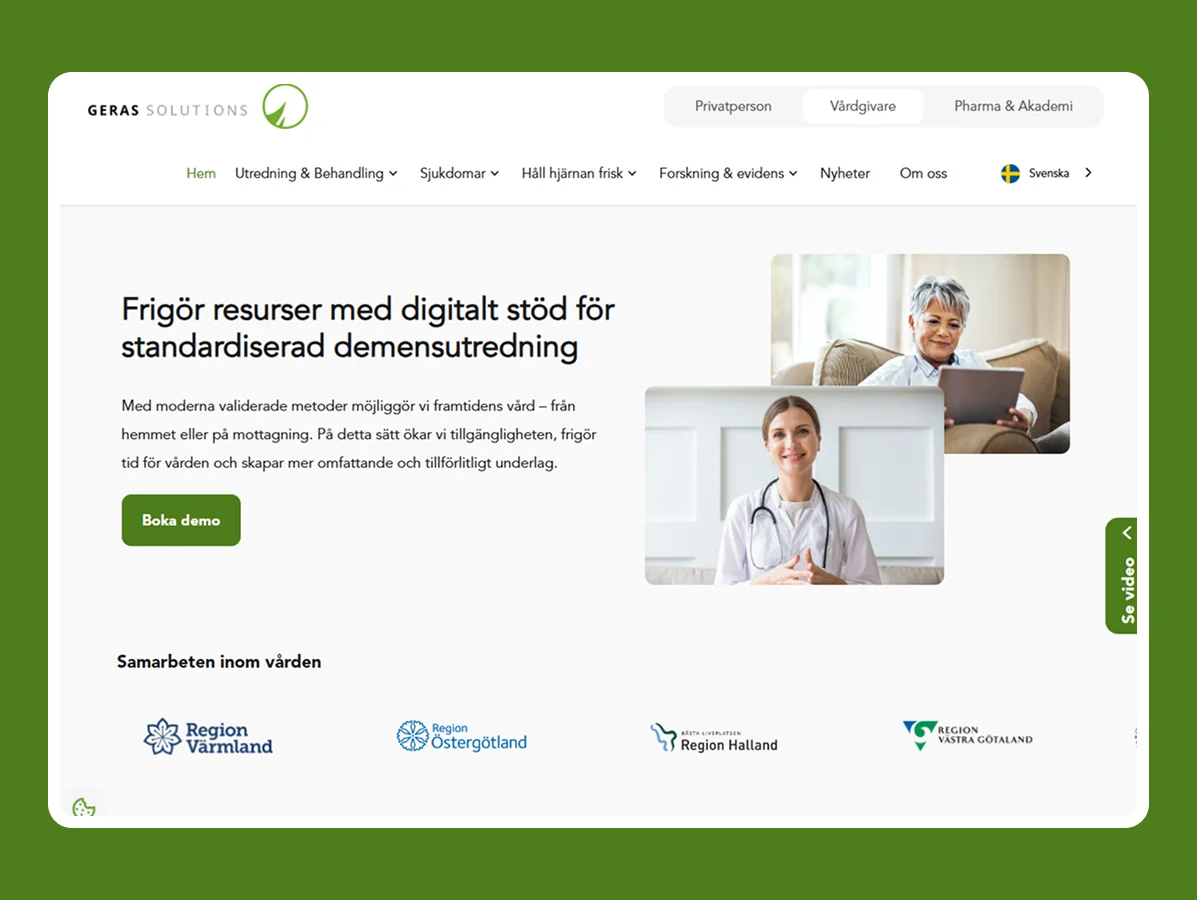
Geras
#healthcare
#express
#ios
#node.js
#react native
#react redux
Sweden

Geras

Mobile health application for dementia support
Geras brought our team in to develop the backend, server-side authorization, and a web application for its m-health platform.
4 months
To Usability Testing
2 platforms
Mobile & Web
View case study
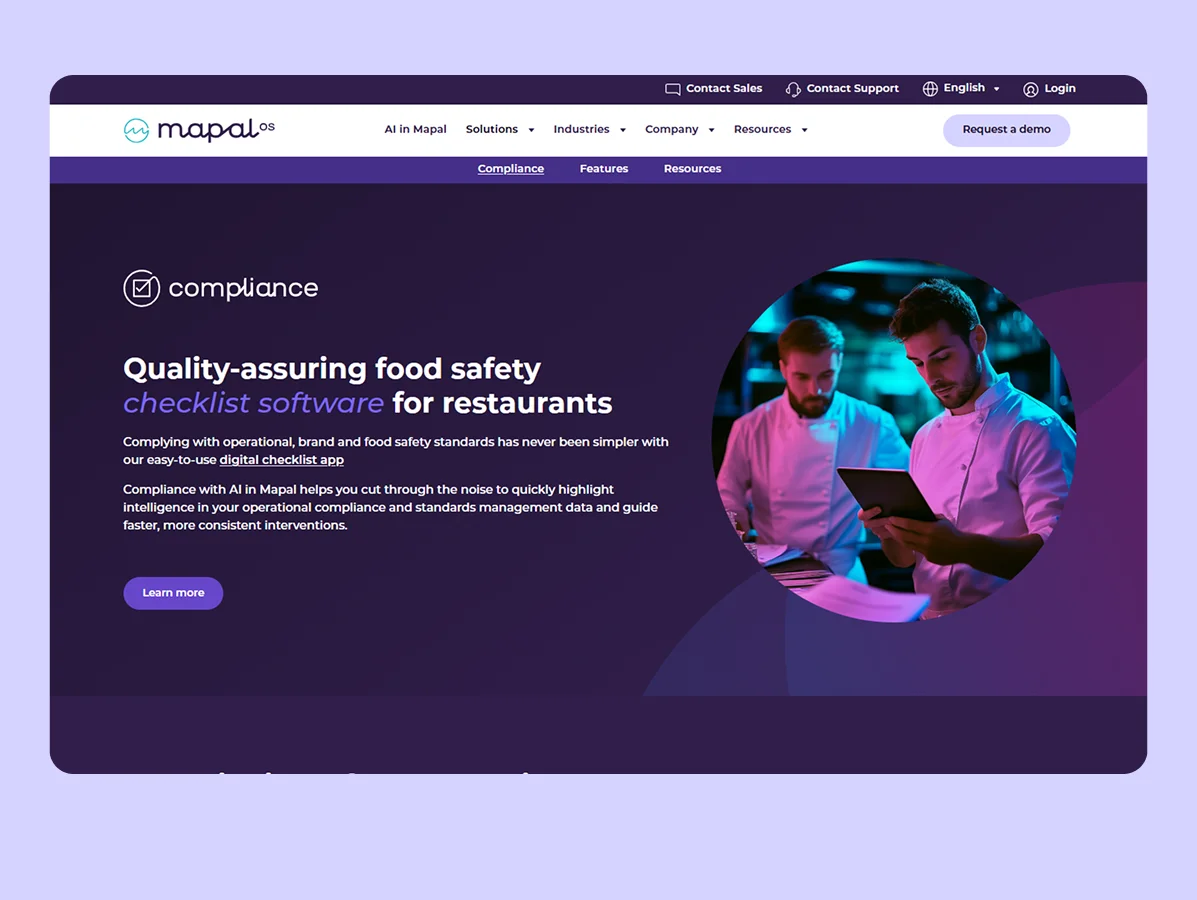
Compliance
#saas
#.net
#android
#angular
#azure
#c#
#ios
Sweden

Compliance

Compliance management platform for task creation and monitoring
Our work covered both web and mobile: redesigning the existing system, developing new functionality, revamping the API, and building the iOS and Android versions.
View case study

&frankly
#hr
#android
#ios
#python
Sweden

&frankly

Mobile applications for workplace improvement services
Vilmate became &frankly’s long-term mobile partner, re-engineering the app’s existing functionality for iOS, Android, and tablet applications.
View case study

Questions clients ask
before they start

What's the difference between an automated scan and a full audit?
Automated tools flag maybe 30% of actual accessibility issues — the structural, obvious ones. A full audit adds manual testing with screen readers, keyboard navigation, and real user scenarios. That's where most of the meaningful problems surface.
Which compliance standard do you audit against?
Most clients need WCAG 2.1 Level AA — it's the baseline for both ADA compliance in the US and the European Accessibility Act. We can also work against WCAG 2.2 or Section 508 if your context requires it.
How long does an audit take?
For a typical business site, two to three weeks. Larger platforms with complex user flows take longer. We'll give you a realistic estimate after the scoping call.
Do you fix the issues or just report them?
The audit delivers a prioritized report with remediation guidance. If you need the fixes implemented, we can scope that as a separate engagement — same team, no handoff overhead.
Our site was built by another team. Does that matter?
Not really. We audit the live site regardless of who built it. If remediation work follows, we'll assess the codebase then — but the audit itself doesn't depend on it.

Let's take a look
at your site.

Tell us a bit about what you're working with — we'll come back with a scoping proposal.
Prefer a call?
Pick a time that works for you.
Book a call


    Latest insights

    12 Questions About Fixed-Price Contracts, Answered
    August 19, 2026
    Anastasiia Rezinkina
    12 Questions About Fixed-Price Contracts, Answered #Engagement Models
    Imagine a software project where the budget is approved, the scope is clear, and the final invoice arrives without suspense music in the background. That is the appeal of a fixed-price contract: you know what you are building, how much it should cost, and when it is supposed to be delivered. For a business owner, […]
    How to Build an OMS Integration Without Impacting Your Daily Operations
    August 12, 2026
    Inna Feshchuk
    How to Build an OMS Integration Without Impacting Your Daily Operations #E-commerce
    As your e-commerce brand grows, manual order updates stop being practical. You can automate this process with an Order Management System (OMS). It connects your storefronts, warehouses, and accounting, but setting it up requires careful planning.  The challenge lies in integrating all the mentioned systems without interrupting your active order flow or forcing your business […]
    What Is an E-Commerce OMS (and Why Growing Brands May Need One)?
    August 5, 2026
    Inna Feshchuk
    What Is an E-Commerce OMS (and Why Growing Brands May Need One)? #E-commerce
    At some point, a scaling e-commerce brand starts drowning in spreadsheets. Sales are ticking up, which is a massive win, but operational processes are starting to fracture behind the scenes. It’s a common challenge across companies, but this fact doesn’t make it any easier: managing complex workflows with disconnected, manual data entry is incredibly frustrating. […]