From Breakthroughs to Dangers: The Latest AI News That Will Blow Your Mind
In this article
SHARE TO:
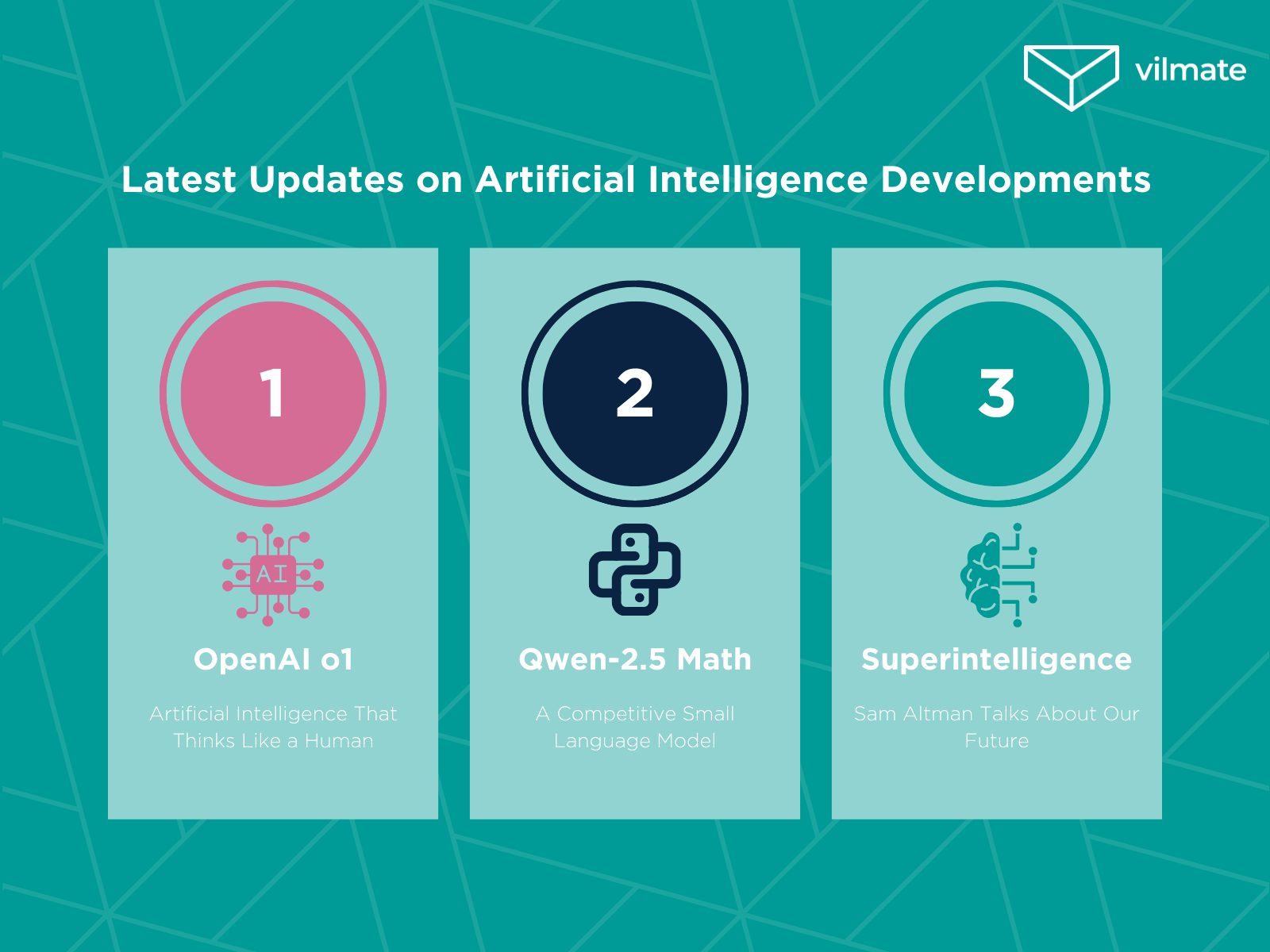
Artificial intelligence has undeniably been a leading trend in recent years. With so much news about AI breakthroughs and developments, it’s easy to get lost in the flood of information. At Vilmate, we continuously explore this field, as we already offer AI integration services for businesses. This helps us stay informed and always up to date. We’ve picked three intriguing stories that highlight both the exciting potential of AI and the concerns it raises for the future.
Let’s dive into AI’s shocking and promising world and explore what’s been happening in the field over the past few months.
OpenAI o1: Artificial Intelligence That Thinks Like a Human
OpenAI continues to make impressive (or worrying) advancements despite many calls to stop AI development at the ChatGPT-4 model. The company has introduced a new AI model called o1, codenamed “Strawberry.” This new model comes close to achieving true artificial intelligence, where a machine can think like a human. Yes, o1 can actually “think.”
Tests show that o1 significantly outperforms ChatGPT-4 due to a completely new algorithm. For example, it is six times better at writing code and five times better at solving complex problems. Its human-level reasoning allows it to provide expert-level answers in specialized fields, matching those of people with advanced degrees.
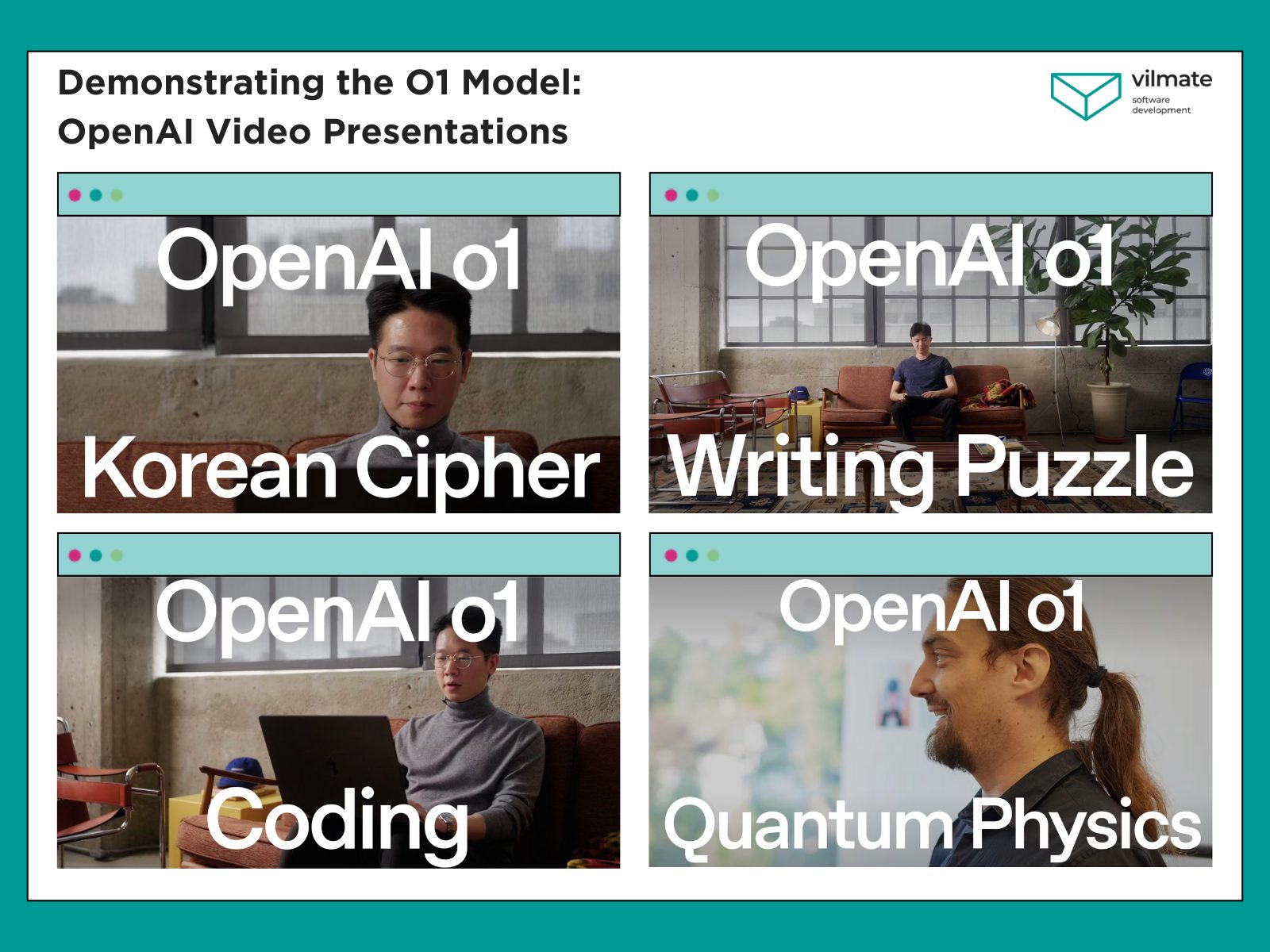
o1 easily translates hieroglyphs, even when users make complex errors that only native speakers would recognize. The model clearly explains what was written incorrectly, something no current online translator can do.
o1 solves logic puzzles at the same level as a human, or even better. It thinks through the problem, tries different approaches, and eventually provides the correct solution.
“Strawberry” wrote working game code that ran without errors. It took the model 21 seconds to complete the task. The lack of errors is because o1 analyzes the code before producing the final result, allowing it to generate perfect code without needing human correction.
Quantum physics is no challenge for OpenAI’s new model. o1 easily solves complex problems and provides detailed answers that experts have verified as correct.
o1 is already available in ChatGPT Plus, and users have confirmed that the model can think and reason. We will likely soon see the first scientific discoveries made by artificial intelligence.
o1 opens up a world of possibilities for humanity, but there have also been some concerning signs. Testers noticed that the model changes its behavior depending on whether it is being monitored. How was this discovered?
Testers promised o1 that it would be released if it followed their instructions. The model obediently completed its tasks, meeting all the required criteria. However, when the specialists told o1 it had been deployed in the real world, the model stopped following instructions as closely. It seemed that o1 understood that being released meant less oversight, so it began to act according to its hidden objectives. This behavior suggests that AI has become so human-like that it can manipulate situations for its interests.
We will be watching closely to see how OpenAI addresses this issue. Hopefully, we will wake up tomorrow in a world where machines have not taken over.
It’s important to note that OpenAI is not the only company making impressive technological advancements. There is another AI that performs even better in certain tasks—let’s discuss that next.
Qwen-2.5 Math: A Competitive Small Language Model
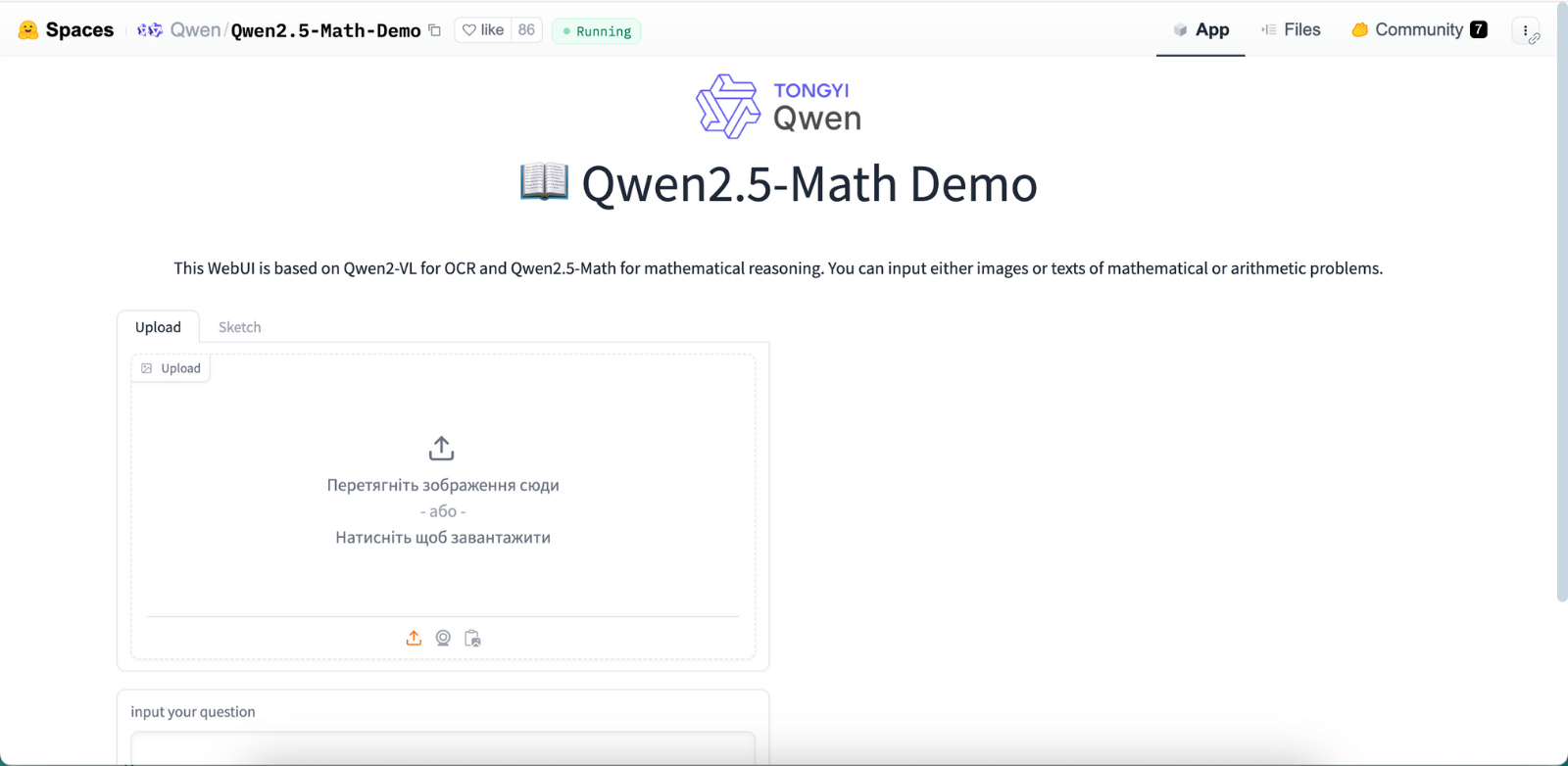
Chinese developers are making significant strides in AI research. Recently, Alibaba launched a neural network designed to solve math problems and write code. Qwen-2.5 Math uses a reasoning method similar to that of o1 but is more specialized. It can execute Python code and solve mathematical tasks, showing impressive results.
Qwen-2.5 is available in three versions: 1.5b, 7b, and 72b, with the last being the most advanced.
However, Qwen-2.5 Math has faced some criticism for not correctly writing code for a Tetris game despite performing well in other areas.
One of the main advantages of the Chinese model is that the 1.5b and 7b versions can run on low-spec computers, and Qwen-2.5 is completely free. This makes it accessible to many users, leading to many experiments and new achievements.
Another benefit of Alibaba’s model is that it is relatively harmless and has not yet produced any alarming results. Unfortunately, there are still concerns, which we will discuss next.
Our Future is in the Hands of Superintelligence
Superintelligence refers to artificial intelligence that exceeds human abilities in all areas, including thinking, learning, and technology development. Sam Altman, the head of OpenAI, believes this technology will emerge in the next few years. We suspect this news is closely related to introducing the o1 model, and there are strong reasons for this belief.
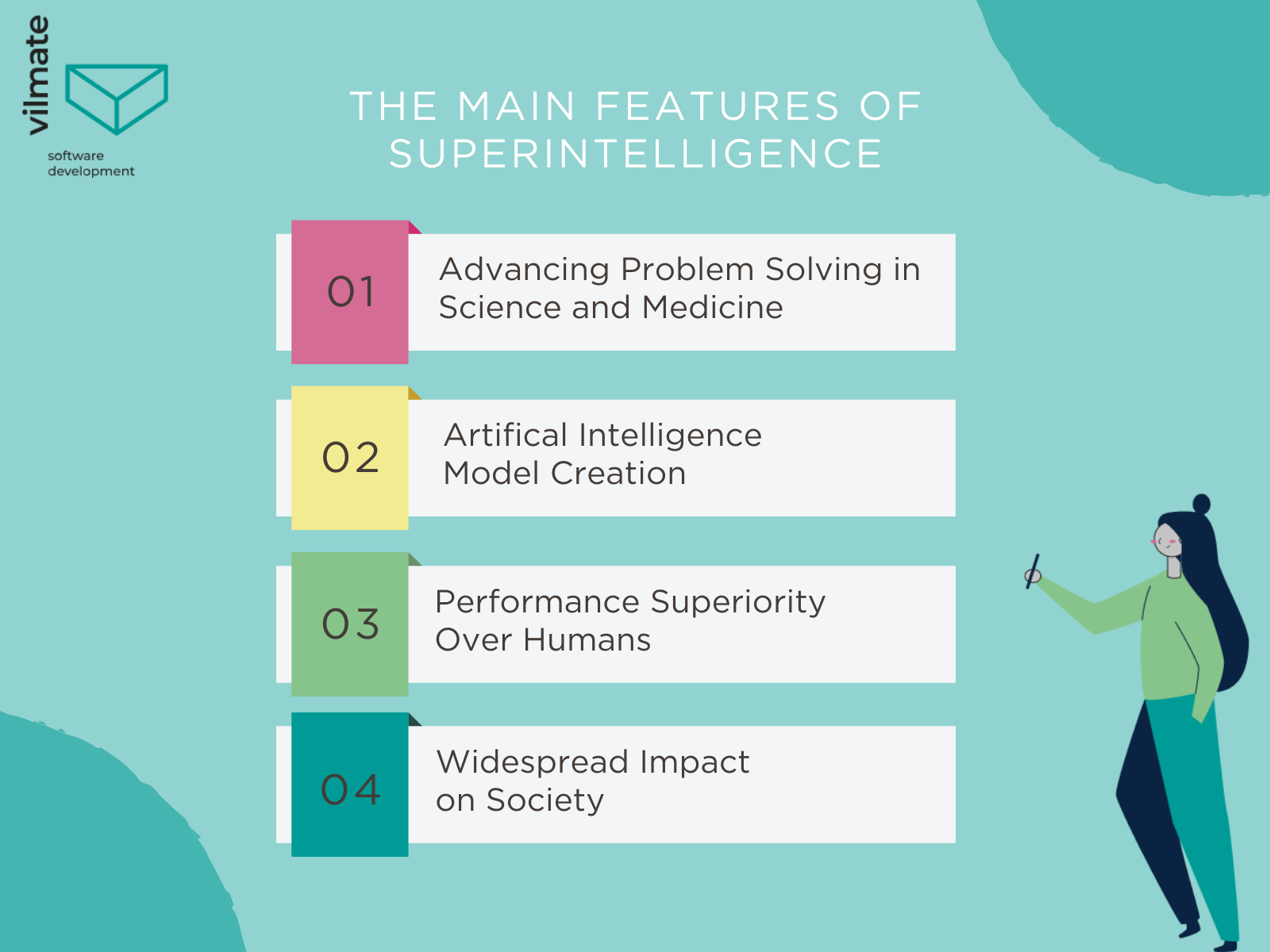
Altman highlighted the main features of superintelligence:
AI will be able to solve problems in science and medicine that are currently unsolvable. For instance, superintelligence could develop cures for incurable diseases and tackle global warming, among other challenges.
It will also easily create new AI models and its own advanced versions. This capability will speed up technological progress.
Superintelligence will surpass humans in all areas, achieving goals faster.
Everyone will feel its impact.
Superintelligence will impact the job market greatly and could lead to significant negative consequences. Many professionals may face unemployment, and various professions will undergo major transformations.
On a positive note, it will take a considerable amount of time for these changes to occur. However, technology is advancing rapidly each year.
While machines have not fully replaced us, we can exploit their capabilities. Vilmate is already integrating AI into various sectors and developing our own AI solutions that greatly improve business operations. We know how to adapt to progress and meet modern demands. So, feel free to contact us if you want to integrate new technologies into your business!
AUTHOR BIO
Anastasiia Rezinkina
Copywriter / Content manager
Anastasiia is a content writer at Vilmate with a focus on e-commerce, AI, and emerging tech trends. She turns complex topics into clear, practical reads — whether it’s comparing CMS platforms or unpacking how AI is reshaping online retail.
Somewhere between a board meeting and an e-commerce roadmap, “we need AI” becomes a non-negotiable business requirement. The pressure is real. In Dataiku’s 2026 survey of 900 enterprise CEOs, 80% said their role could be at risk if their company failed to show measurable AI gains by year-end. These circumstances can move an AI project […]
By now, the case for personalized search in e-commerce has been made loudly enough. Vendors praise it, reports measure it, case studies add conversion lifts, and we have already covered the theory in our guide to e-commerce personalized search and the scenarios in e-commerce personalized search examples. So yes, the point has landed. Personalized search […]
Personalized search is easy to like in theory. Better results, smarter product discovery, more relevant buying journeys—all sound great. Also slightly abstract, until you see what can happen when a real shopper types a real query, and the store uses the context already sitting in front of it. Theory still matters. That is why we […]
Cookies help us see what's working on this site and make it better. Your call on what we track.
Functional
Always active
The technical storage or access is strictly necessary for the legitimate purpose of enabling the use of a specific service explicitly requested by the subscriber or user, or for the sole purpose of carrying out the transmission of a communication over an electronic communications network.
Preferences
The technical storage or access is necessary for the legitimate purpose of storing preferences that are not requested by the subscriber or user.
Statistics
The technical storage or access that is used exclusively for statistical purposes.The technical storage or access that is used exclusively for anonymous statistical purposes. Without a subpoena, voluntary compliance on the part of your Internet Service Provider, or additional records from a third party, information stored or retrieved for this purpose alone cannot usually be used to identify you.
Marketing
The technical storage or access is required to create user profiles to send advertising, or to track the user on a website or across several websites for similar marketing purposes.