Unlock the Power of Omnichannel Strategy for Better Customer Service
In this article
SHARE TO:
In today’s competitive online retail market, businesses must work hard to win each customer. Consumer expectations are growing, and people now demand flawless service. To meet these demands, companies offer more features to make shopping as convenient as possible. Communication channels are expanding, and customers choose the ones that suit them best. To stay ahead, you must provide multiple ways for users to reach you while ensuring no important information is lost when channels change.
The omnichannel approach makes it easier to deliver high-quality service. It connects all communication channels into a single system, preserving important data. Today, we’ll discuss the benefits of omnichannel commerce, how it differs from multichannel service, and why this strategy is essential for your business.
Omnichannel Service vs. Multichannel Service: What’s the Difference?
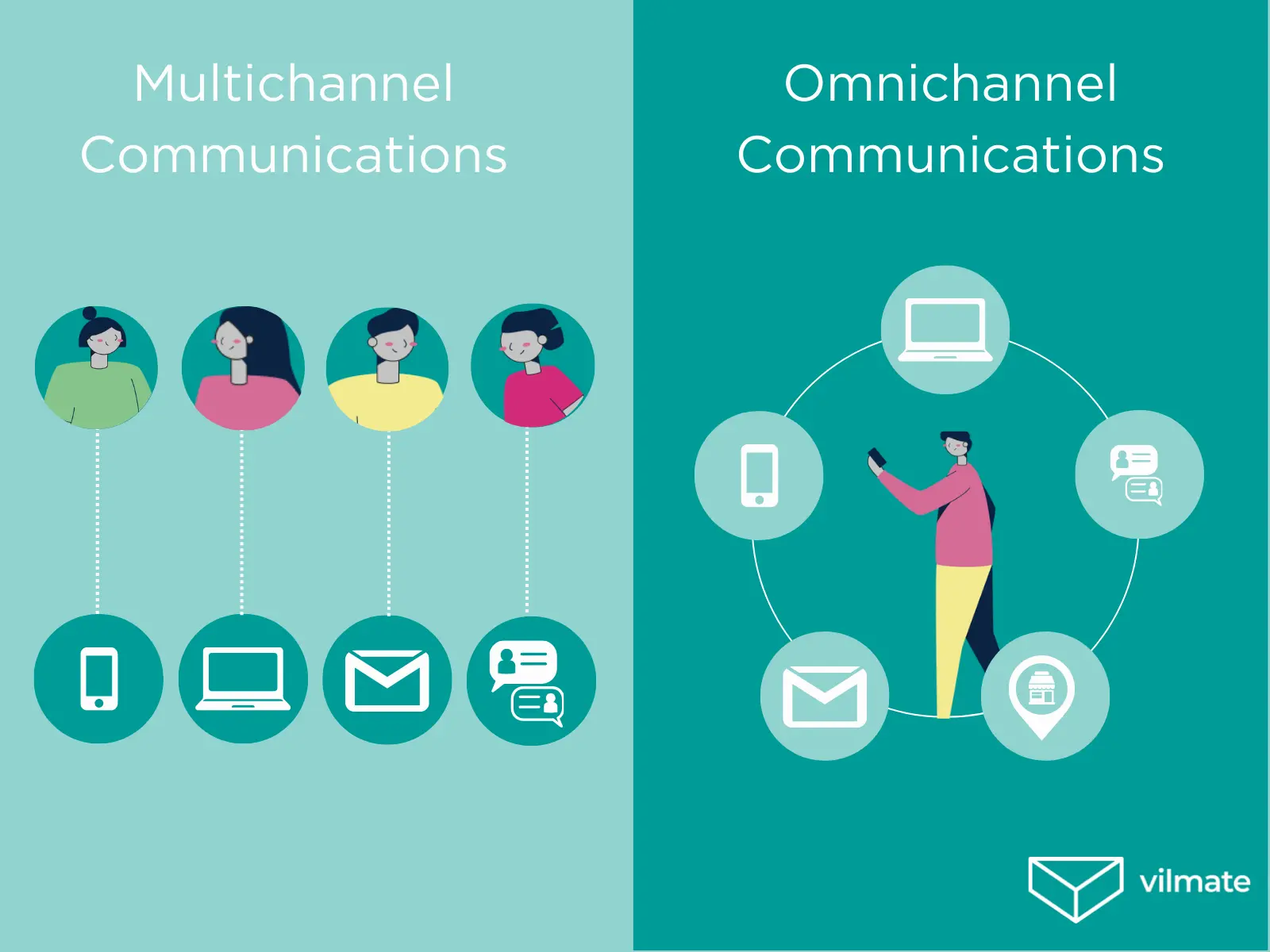
Let’s begin with the simpler and more familiar option: multichannel service. This approach allows customers to contact a manager through various methods, such as email, phone, chat, or messaging apps. However, these channels are separate and not connected.
Now, let’s look at omnichannel customer service. This approach provides support through an integrated system of devices and communication points. Simply put, a customer can start a conversation through one channel (like a chatbot) and continue it through another (like speaking with a manager over the phone). The manager will have all the information the customer shared earlier. They’ll already know the customer’s questions and concerns, so the customer won’t need to repeat themselves.
With omnichannel service, you ensure a seamless customer communication experience and deliver personalized support. This approach offers many benefits, which we’ll explore further.
The Benefits of an Omnichannel Strategy
If you’re exploring what an omnichannel strategy is, you’re likely interested in improving the customer experience. But how can this approach help you provide better service?
Customer Loyalty: An omnichannel strategy ensures convenience, transparency, and fast service. Seamless interactions and awareness of customer context show that your company prioritizes their needs and moves beyond outdated sales methods.
Higher Customer Satisfaction: This approach reduces frustrations caused by disconnected communication channels. Customers can interact with your business through their preferred platforms while enjoying consistent service quality.
Increased Sales: Integrating data from different channels helps you understand customer needs better. This step lets you offer personalized products or services, encouraging more purchases.
Faster Issue Resolution: Knowing the full context of customer interactions makes it easier to address their concerns quickly and accurately. This approach reduces stress and builds trust.
Stronger Competitive Advantage: Companies that use an omnichannel strategy effectively stand out by offering better service and convenience than competitors.
Streamlined Internal Processes: Integrating communication channels and systems improves team efficiency, reduces errors, and speeds up request handling.
Better Customer Insights: An omnichannel approach collects detailed data on customer behavior and preferences, which can be used to improve your marketing strategies.
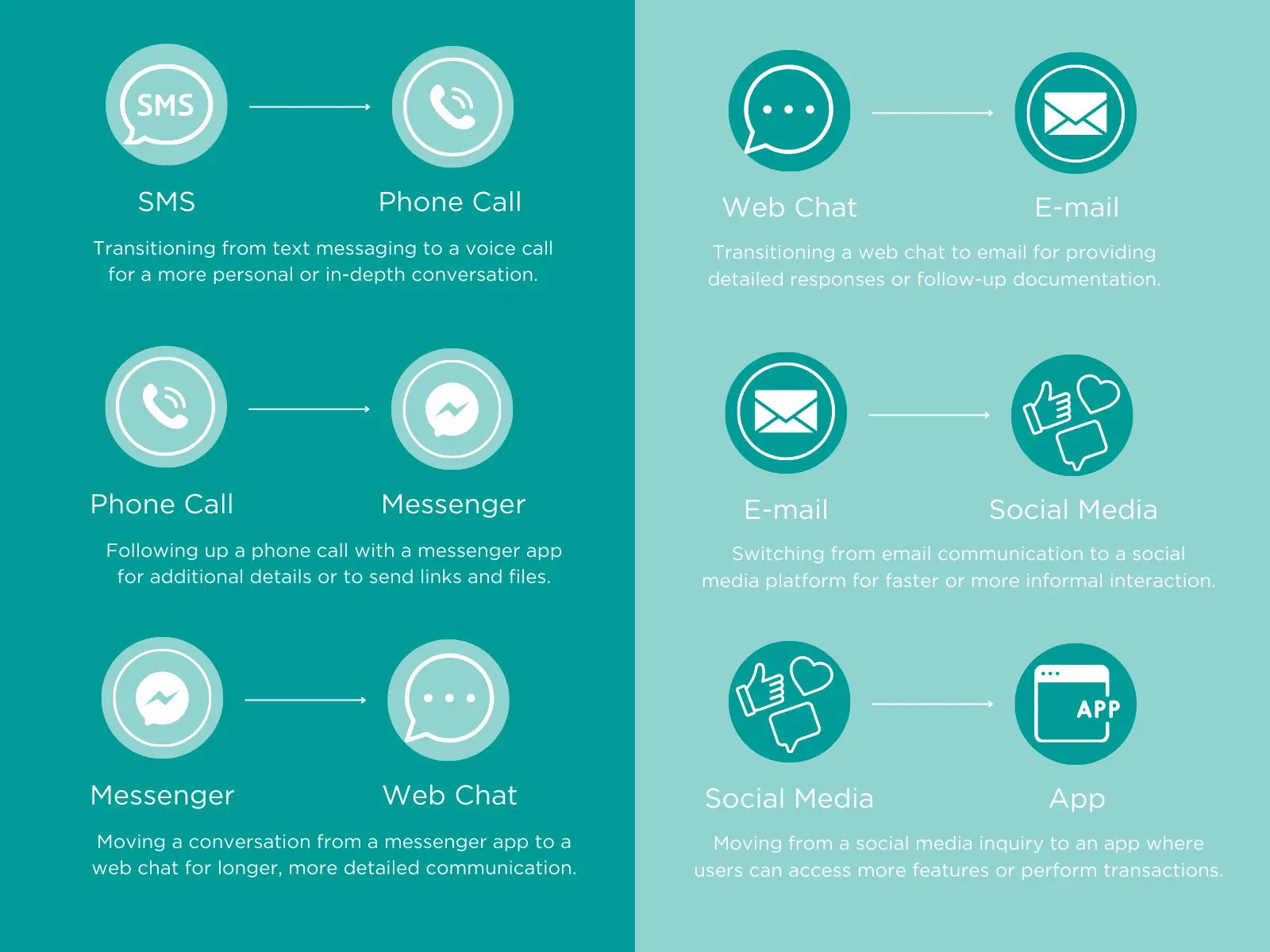
With this strategy, you can offer customers the flexibility to switch to more convenient, secure, cost-effective, or informative channels. Move conversations from an app to a web chat, email to social media, or SMS to a phone call—any combination is possible.
Ongoing Optimization: Customer needs and technologies change, making it necessary to update tools and strategies regularly.
Employee Adaptation: Not all team members can quickly adjust to new tools and workflows, which can cause temporary disruptions.
It’s best to trust professionals with omnichannel integration to avoid these risks. At Vilmate, we offer a range of e-commerce services, including implementing omnichannel strategies. Partner with us, and you won’t have to worry about security, optimization, or complex management. Our team will provide the perfect solution for seamless customer service.
Still, trying to decide if an omnichannel strategy is right for your business? Let’s look at when this approach becomes essential.
Does Your Business Need Omnichannel Support?
Let’s look at some scenarios where omnichannel service is essential:
1. Protecting Confidential Information
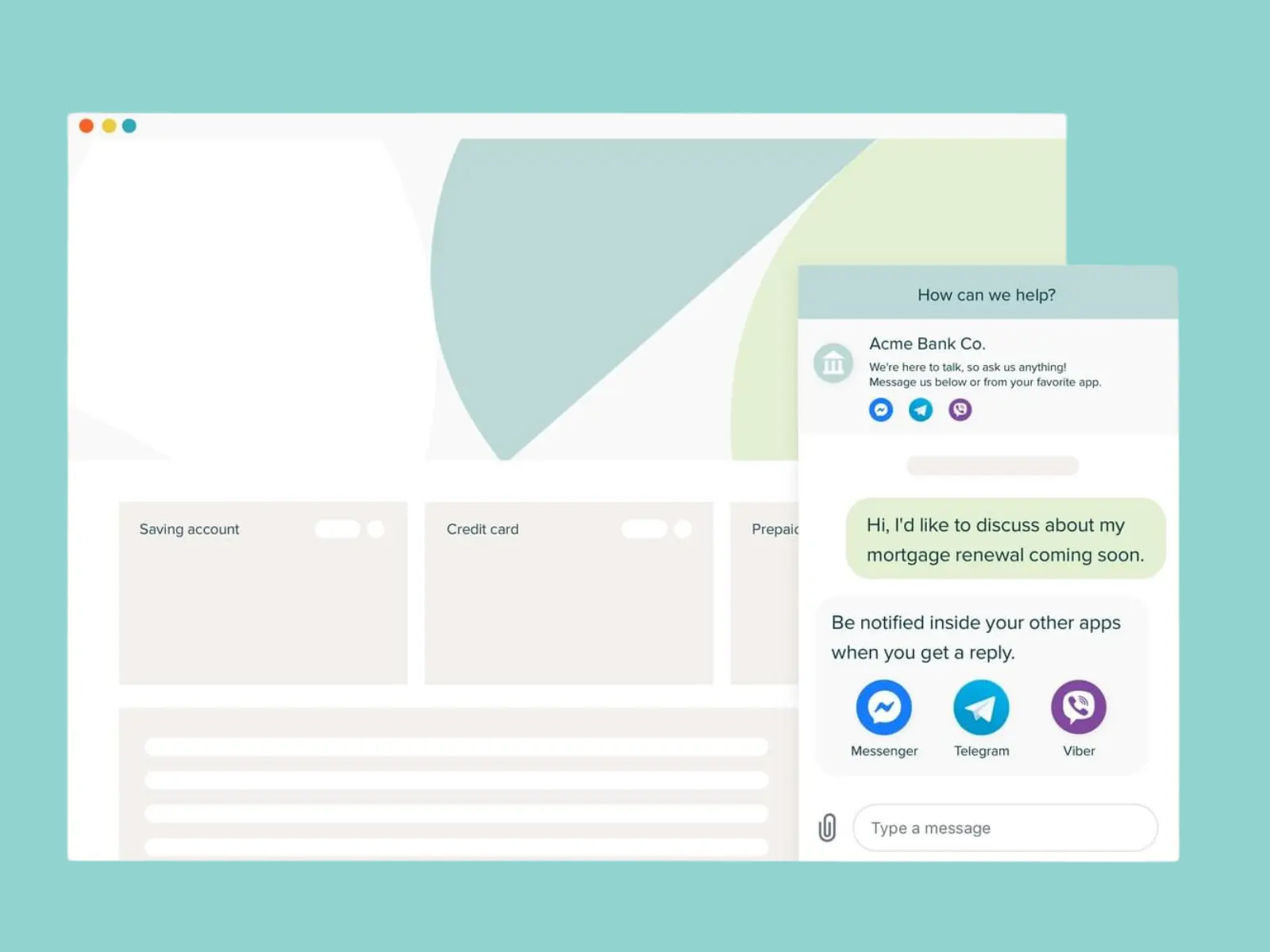
Messaging apps and social networks like Facebook Messenger or WhatsApp are convenient for communication. However, when requesting sensitive customer information, security becomes a priority. This is often true for banks, insurance companies, or online stores. While third-party platforms can’t guarantee full data protection, your mobile app can provide a secure environment. With a clear call-to-action, you can guide customers to a safer channel without losing the conversation’s context.
2. Handling Delayed Responses
Omnichannel support is ideal when a manager’s response isn’t immediate. For example, customers who reach out through a website chat won’t want to keep the page open while waiting. Instead, they can receive updates via SMS or a messaging app and continue the conversation there. All interactions remain linked, ensuring nothing is lost.
3. Sharing Detailed Information
Not all channels can handle every type of communication. For instance, website chats offer a better experience than SMS and are free. Messaging apps are more convenient than email. Some channels may not support sending multiple images (like product photos) or attaching files (like user manuals).
With multichannel service, switching between platforms often means losing context. An omnichannel approach keeps all information intact, allowing seamless transitions between channels.
If you’ve experienced situations where switching channels was necessary, omnichannel support can make the process much smoother. Let’s discuss how to implement it and what you’ll need to get started.
Implementing Omnichannel Service in Your Business
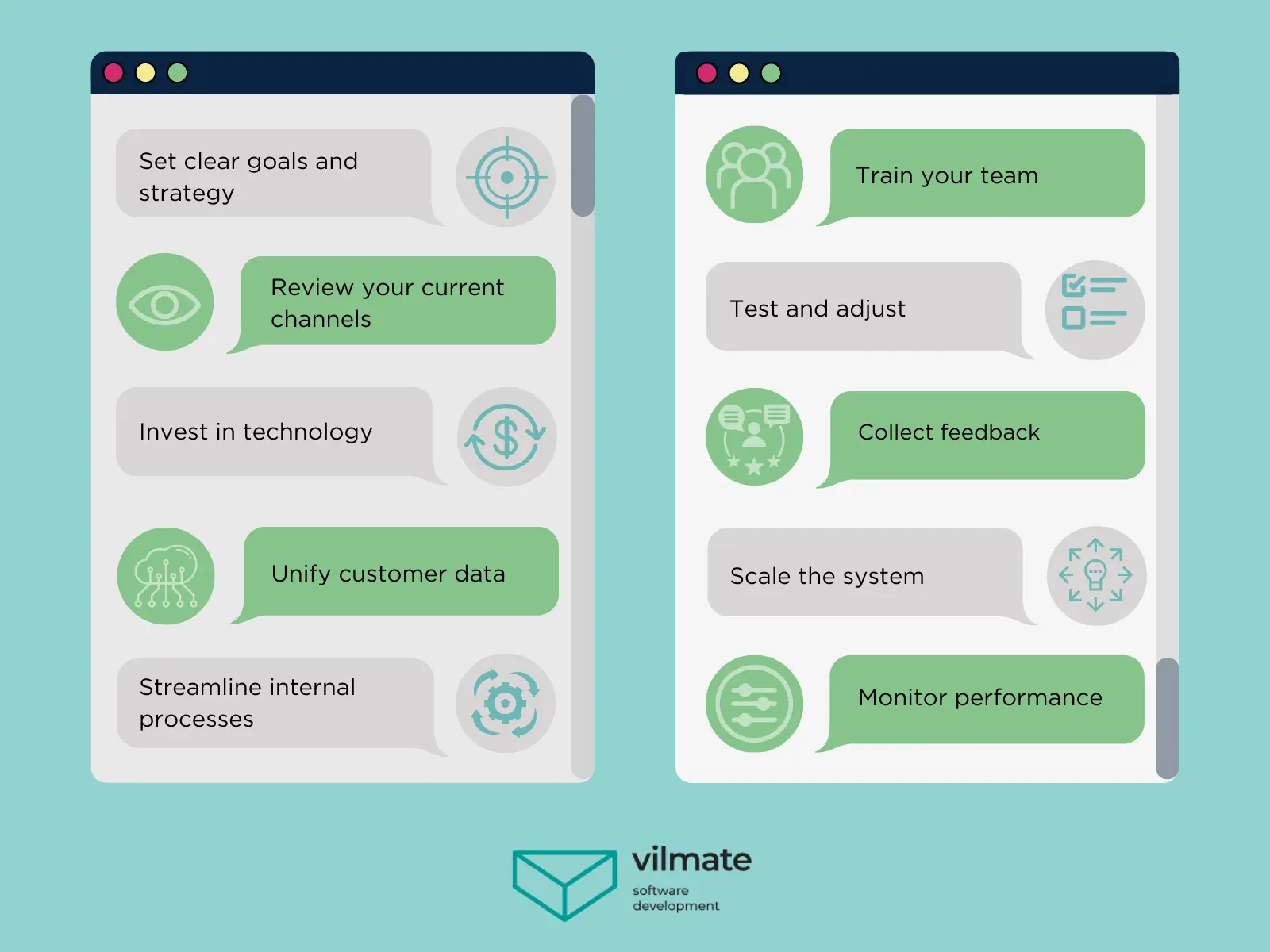
As mentioned earlier, implementing an omnichannel approach requires working with skilled experts like those at Vilmate. However, any service transformation needs careful preparation. Here are some steps to follow when integrating omnichannel service:
Set Clear Goals and Strategy: Clearly define why your company needs an omnichannel approach—whether it’s to boost loyalty, enhance customer experience, increase sales, or something else.
Evaluate Current Communication Channels: Review all your channels (website, social media, call center, offline stores) to identify their strengths and weaknesses.
Invest in Technology: Implement a CRM system to store customer data and use analytics tools to track their behavior and preferences.
Integrate Customer Data: Combine all data sources so customer information is available at every stage of interaction. This helps you maintain context and track communication history.
Streamline Internal Processes: Create standards for customer service across all channels and ensure your team has access to the right tools and data.
Train Employees: Ensure your team is trained to use new tools and adapt to the omnichannel model. A trained team will help ensure a smooth transition and high-quality service.
Test and Adjust: Start with a small pilot project in one region or using one channel. This approach will help you identify any issues and fine-tune the system.
Collect Feedback: Gather feedback from customers and employees to improve the service. Use this input to enhance your strategy continuously.
Scale the System: Roll out the omnichannel approach across your business after testing and adding new channels or features as needed.
Monitor Performance: Regularly track key metrics (customer satisfaction, response time, repeat sales) and adjust your strategy based on the results.
Conclusions
Customers now expect omnichannel service from companies. Statistics show that 50% of buyers interact with four channels before purchasing and believe managers should be aware of their interactions. This makes it crucial to keep all the information customers provide in one place.
E-commerce continues to evolve with new technologies like voice interfaces, AI chatbots, and the Internet of Things. These are emerging channels that offer a fresh customer experience. Integrating them into one system is essential to maintaining context and personalizing the service.
If you’re ready to provide the best user experience and increase your profits, contact Vilmate. We can help you integrate an omnichannel platform that suits your needs. Become your customers’ personal manager effortlessly. With an omnichannel strategy, you’ll build customer loyalty!
AUTHOR BIO
Anastasiia Rezinkina
Copywriter / Content manager
Anastasiia is a content writer at Vilmate with a focus on e-commerce, AI, and emerging tech trends. She turns complex topics into clear, practical reads — whether it’s comparing CMS platforms or unpacking how AI is reshaping online retail.
An order splits into two shipments, and no system flags it in advance. The warehouse shows stock that’s actually gone. A customer returns one item out of three, and accounting still doesn’t see that the return ever happened. Support pulls up the customer’s record and can’t tell what stage the order is at—because that stage […]
When order management in a Google Spreadsheet becomes problematic, most small business owners usually do the same thing: type “10 best OMS” in Google search, open up several tabs, and try to choose the winner by the number of stars on review pages. These rating tables, however, rarely take into consideration your particular characteristics, such […]
CRM and order management systems are two different systems that exchange data. They address different questions: it’s “Who is our client, and why are they buying this?” for the CRM and “What exactly has been ordered, and where is it now?” for the OMS. These two systems are meant to complement each other, but in […]
Cookies help us see what's working on this site and make it better. Your call on what we track.
Functional
Always active
The technical storage or access is strictly necessary for the legitimate purpose of enabling the use of a specific service explicitly requested by the subscriber or user, or for the sole purpose of carrying out the transmission of a communication over an electronic communications network.
Preferences
The technical storage or access is necessary for the legitimate purpose of storing preferences that are not requested by the subscriber or user.
Statistics
The technical storage or access that is used exclusively for statistical purposes.The technical storage or access that is used exclusively for anonymous statistical purposes. Without a subpoena, voluntary compliance on the part of your Internet Service Provider, or additional records from a third party, information stored or retrieved for this purpose alone cannot usually be used to identify you.
Marketing
The technical storage or access is required to create user profiles to send advertising, or to track the user on a website or across several websites for similar marketing purposes.