Building a Marketplace Like Amazon: Features, Costs, and Strategy
In this article
SHARE TO:
Building a marketplace like Amazon is an ambitious goal—but possible. Today, there are many successful marketplaces around the world. Each follows its path, shaped by the needs of local markets and user preferences.
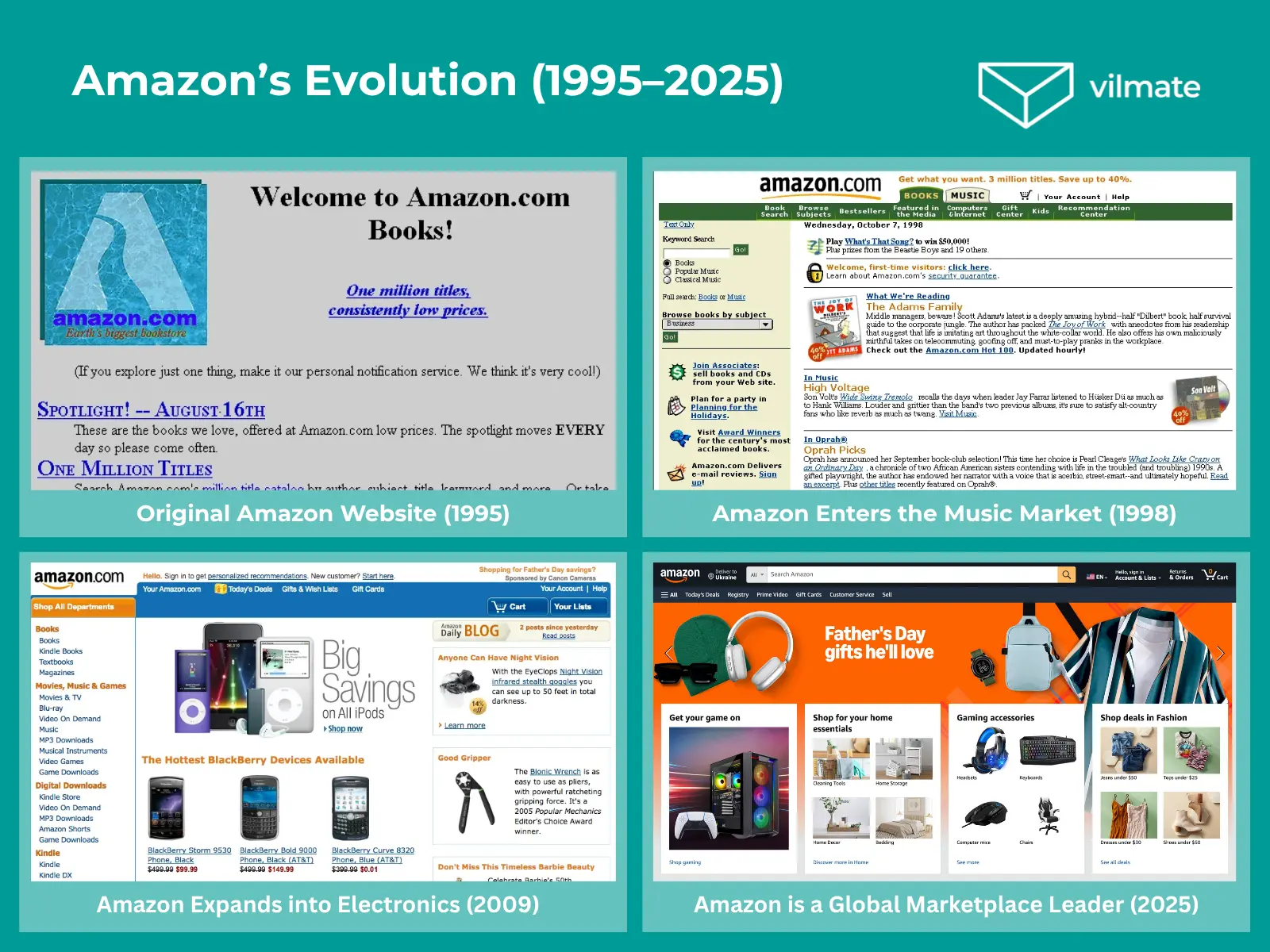
Amazon, for example, started as a regular online store. In 1995, it sold only books. Being one of the first companies to enter the market gave Amazon a significant early advantage. Over time, Amazon became a global platform with millions of products, a complex logistics system, its cloud infrastructure, and one of the best user experiences in the world.
If you’re considering a similar journey, it’s important to be prepared for a long-term commitment. Of course, it’s not easy. Behind a clean user interface are many technical layers: database management, integrations with payment and delivery systems, system architecture, analytics, and security. However, by approaching it step by step, it becomes an achievable goal.
This article will explain how to build an e-commerce platform that can grow and handle heavy traffic over time. We’ll cover the key stages and essential features that will help you start from scratch — and stay on track along the way.
How Amazon Makes Money: Breaking Down the Business Model
Amazon is not just an online store — it’s a complex ecosystem with a smart monetization strategy. According to Statista, the company’s net revenue grew from $3 billion in 2007 to $170 billion in a quarter in 2023. Growth like this doesn’t happen without well-organized revenue streams.
Defining your monetization strategy early is essential to build your e-commerce platform. The sooner you do this, the more stable and scalable your business can become. Let’s take a look at the main ways Amazon makes money:
1. Seller Fees
Sellers pay Amazon to list and sell their products. Fees may include per-item charges, referral fees (depending on category), and additional shipping or digital content charges. This is one of Amazon’s largest income sources.
2. High-Volume Seller Fees
Sellers with over 100,000 unique products (ASINs) are charged extra monthly fees. This encourages sellers to manage their catalogs more efficiently and helps Amazon profit from platform scale.
3. Sponsored Ads
Amazon allows sellers to promote their products using built-in advertising tools. These work like a PPC system and generate strong revenue — for both the platform and the sellers.
4. Amazon Prime Membership
With a paid Prime subscription, users get fast delivery, access to streaming services, and personalized offers. For Amazon, it means steady income and loyal customers.
5. Digital Content Sales
Services like Kindle and Audible let Amazon earn money by selling books, audiobooks, and subscriptions — while keeping users engaged on the platform.
6. Cloud Services (AWS)
Amazon Web Services is a separate business unit that brings in significant profits. It’s a great example of how an e-commerce platform can grow beyond retail and succeed in tech.
Of course, Amazon is one of the biggest tech companies in the world. You don’t have to copy everything it does. But taking a few ideas from its model and adjusting them to fit your business is smart. What matters most is choosing what works for you — and doing it right.
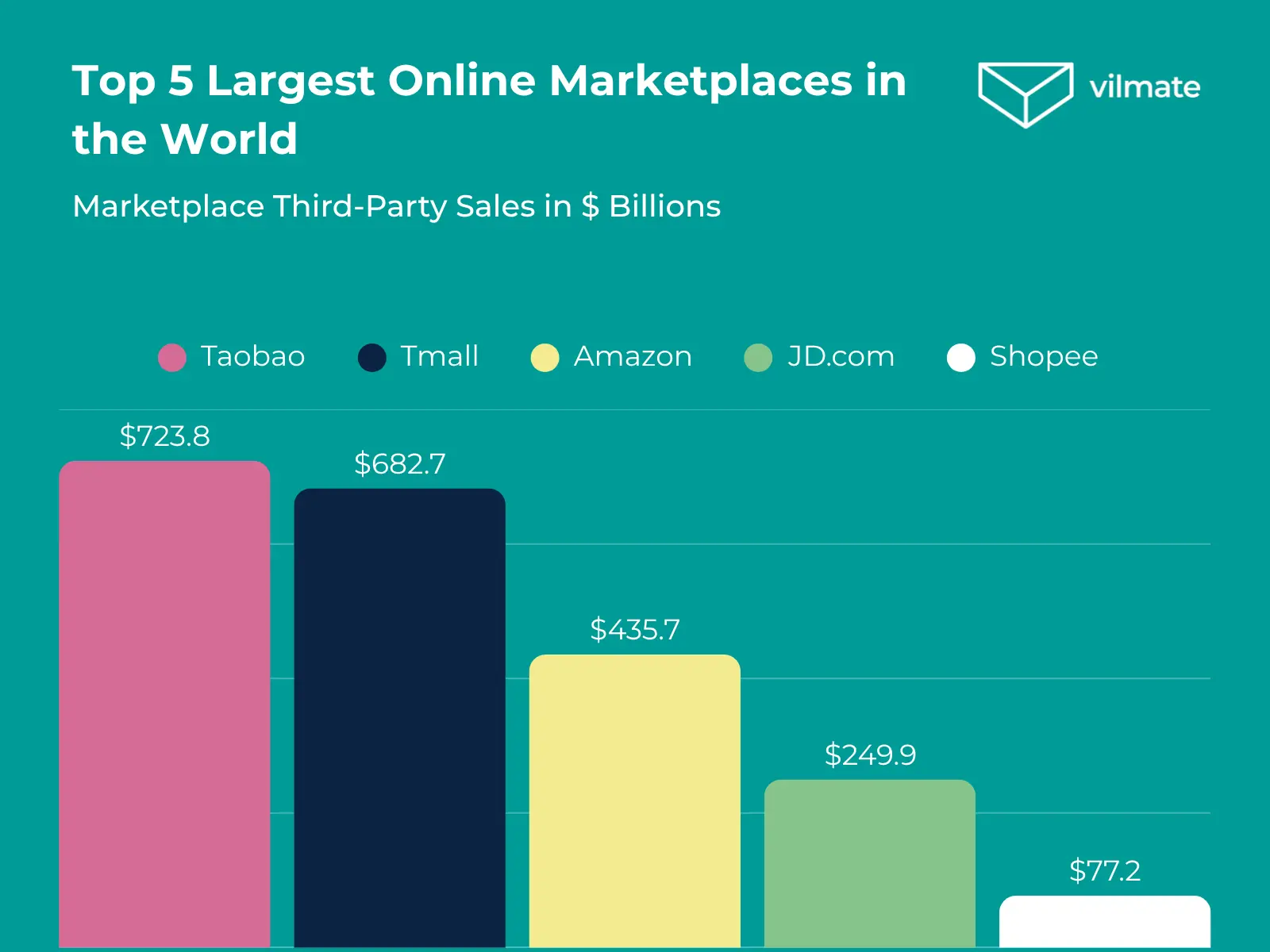
Keep in mind that Amazon isn’t the only giant in the game. While its monetization strategy is strong and diverse, other global marketplaces also show huge third-party sales volumes.
Let’s compare the top five online marketplaces’ performance regarding third-party seller revenue to understand the bigger picture. Here’s a chart showing sales volumes from third-party vendors across these platforms:
Key Features of an E-commerce Platform Like Amazon
To succeed, an e-commerce platform needs to be easy to use — for both sellers and buyers. Amazon shows how the right features can help grow a business, keep users engaged, and ensure everything runs smoothly.
Features for Sellers
Sellers should fully control their products, orders, and customer experience. Here are the primary tools they need:
Registration and Verification: A secure and quick sign-up process with identity verification options.
Product Management: A simple way to add and edit product details — including names, images, prices, descriptions, and shipping settings.
Order and Return Handling: Support for different fulfillment models (including in-house or third-party), order tracking, and return processing.
Payment Tools: Integration with reliable payment systems, automated payouts, and fraud protection.
Ratings and Reviews: Access to customer feedback with the ability to analyze and respond.
Notifications and Messaging: Alerts about new orders, updates, reviews, and a built-in chat with customers.
Analytics: Reports on sales, inventory, top products, and ad performance.
Features for Buyers
Buyers want a shopping experience that is simple, fast, and secure — from browsing to delivery. These features help provide the following:
Easy Sign-Up and Login: Log in using a phone number, email, or social media. Support for personal and business accounts.
Smart Search and Filters: Fast search suggestions, filters by key criteria, and smooth catalog navigation.
Flexible Payment Options: Support for cards, digital wallets, Buy Now Pay Later services, and gift cards.
Order Management: A dashboard to view, track, and change orders in one place.
Wishlists: Save products for later and share curated lists.
Ratings and Reviews: A simple way to leave feedback and help other buyers and sellers.
Customer Support and Help: A help center, live chat with sellers or support, and clear return instructions.
Of course, every project is different. Some platforms need advanced automation or scalability, while others may focus more on flexible shipping or detailed filtering.
At Vilmate, we build e-commerce solutions that consider all of this. Our goal isn’t just to \”build a website like Amazon\” but to create a product that fits your business—stable, reliable, and ready to grow.
How to Build an E-commerce Platform Like Amazon
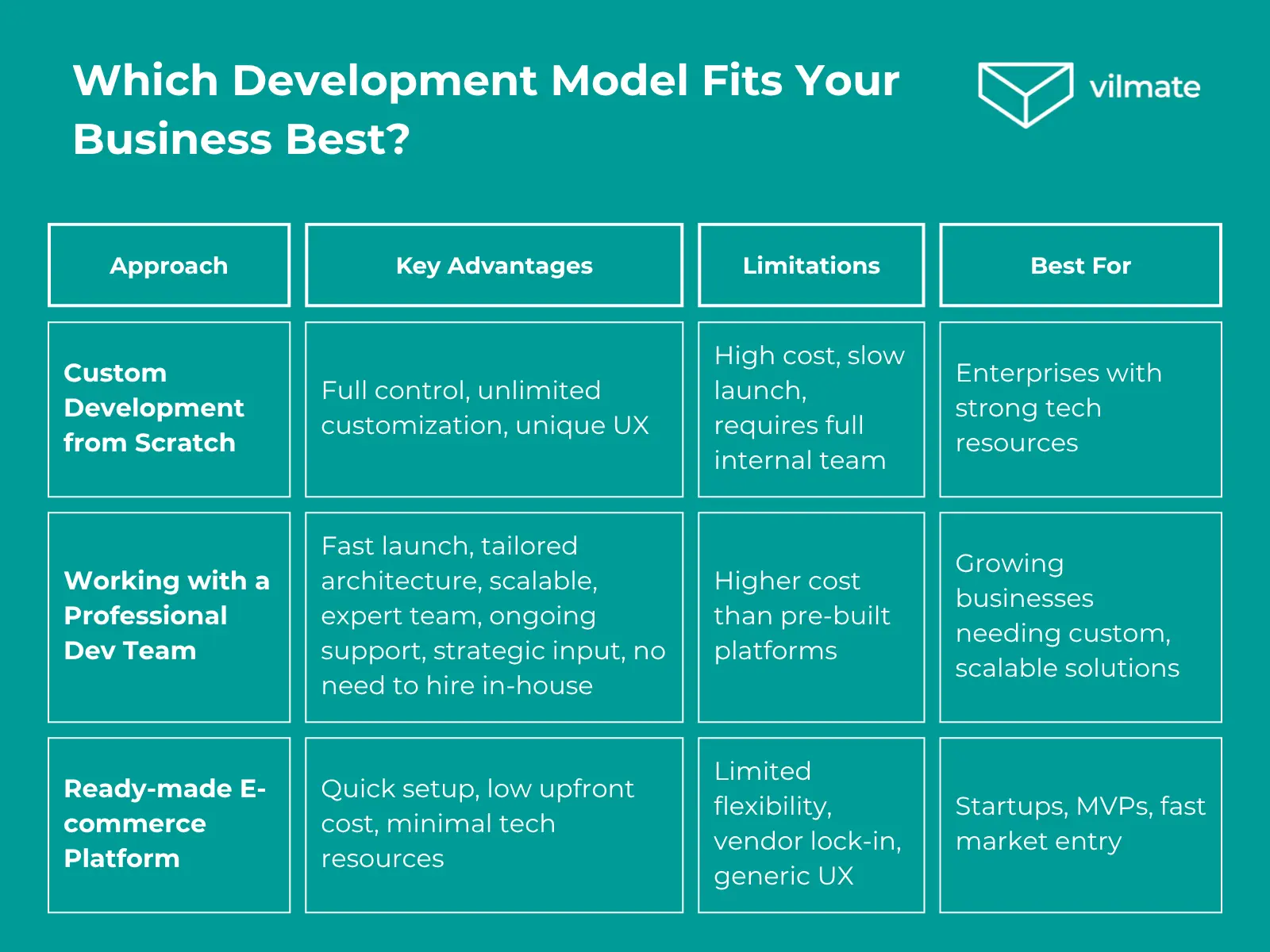
If you plan to launch a marketplace like Amazon or eBay, it’s essential to understand what you want to build and how you will do it. There are different approaches to development — each with its benefits, limitations, and level of involvement on your part. Below are the three most common options:
1. Custom Development from Scratch
This option gives you the most flexibility and control. You start with the architecture, choose your tech stack, build the entire interface and functionality from the ground up, integrate third-party APIs, and design a unique user experience.
It’s a strong choice if you have a technical team and a clear vision of how everything should work. The downside? It usually takes more time, costs more, and requires close attention throughout the whole process—from planning to launch.
2. Working with a Professional Development Team
If you don’t have the needed expertise in-house, it’s a smart move to work with a dedicated e-commerce team. This could be an in-house partner, an outsourced team, or a long-term tech provider.
The benefit is getting experienced specialists who have built similar platforms before. You can focus on the business side while the team handles development. While this approach may cost more than a ready-made solution, it results in a platform tailored to your needs, processes, and audience.
At Vilmate, this is our core approach. We help clients define their technical goals, suggest exemplary architecture, build a team, and create a platform that grows with their business.
3. Using a Ready-made E-commerce Platform
If speed matters most, and you can work with existing features, a ready-made solution may be the best fit. Platforms like BigCommerce, Shopify Plus, or WooCommerce let you launch quickly and affordably.
This approach allows for a fast market entry and lower upfront development costs, and focus only on the features that matter to your business. Many platforms also support scaling and allow for custom plugins or modules when needed.
There’s no single right approach. It all depends on your budget, timeline, and the size of your idea. At Vilmate, we help you choose the best path forward — full custom development, adapting an existing platform, or a flexible hybrid approach.
The most important thing is to move forward with purpose — and build a platform ready to grow with your business.
How to Build an E-commerce Platform Like Amazon: Step by Step
Launching a multi-vendor platform like Amazon may sound like something only tech giants can do. But in reality, it starts with clear, simple steps — understanding your niche, choosing the right technology, setting up your business logic, and designing a smooth user experience. Here’s how the process looks when approached thoughtfully and step by step.
Step 1: Products and Audience — Where It All Begins
Start with two basic but essential questions: What are you selling? And Who are you selling to?
Some marketplaces focus on a single niche—like furniture or baby products—called a vertical model. Others, like Amazon, offer a wide range of products, called a horizontal model.
Both can work well. What matters is how clearly you define your audience. The better you understand your customers, the easier it is to design the website, plan delivery options, and build your marketing.
Step 2: Technology — Domain, Platform, Mobile
Next comes the technical setup.
Choose a short, memorable domain name that can grow into a brand. Then, select your platform. Don’t just pick a system — make sure it fits your business model and growth plans.
Magento or custom development is a good fit if you want full flexibility and plan to grow fast. If you need to launch quickly, consider Shopify Plus or BigCommerce. At Vilmate, we help you choose a setup that supports long-term growth — not just short-term goals.
Design isn’t just about how your site looks — it’s about how easy it is to use.
Great UX/UI helps people find what they need, buy it quickly, and feel good about coming back. Amazon may not be flashy, but it’s incredibly efficient — search, filters, comparisons, and reviews are easy to use.
To build a great experience, make sure to:
Plan clear page layouts
Keep search and catalog simple
Highlight key actions (add to cart, compare, save, etc.)
The easier it is for people to register, find what they want, place an order, and get help — the higher your conversion rate.
You don’t need to start from scratch — use proven patterns like a familiar cart, fast checkout, order history, reviews, wishlists, and push notifications. What matters is doing it well — with speed and simplicity.
And don’t forget: slow pages drive users away. Speed matters.
Step 5: Sellers Are Your Second Customers
On a multi-vendor platform, your sellers are just as important as your buyers.
Make their experience seamless by simplifying product uploads, order tracking, commission calculations, and getting reports should all be easy. The platform should be transparent and efficient.
The better the experience for sellers, the more of them you’ll attract — and the faster your marketplace will grow.
Step 6: Admin Panel and Management
Every great platform relies on a robust and user-friendly admin system.
You need one place to manage sellers, set fees, handle returns, update content, check reports, and support users. If your team has different roles (moderators, support, finance), ensure the admin panel is flexible and easy to use.
Unfortunately, admin tools are often the last thing people think about — but they’re crucial for smooth operations.
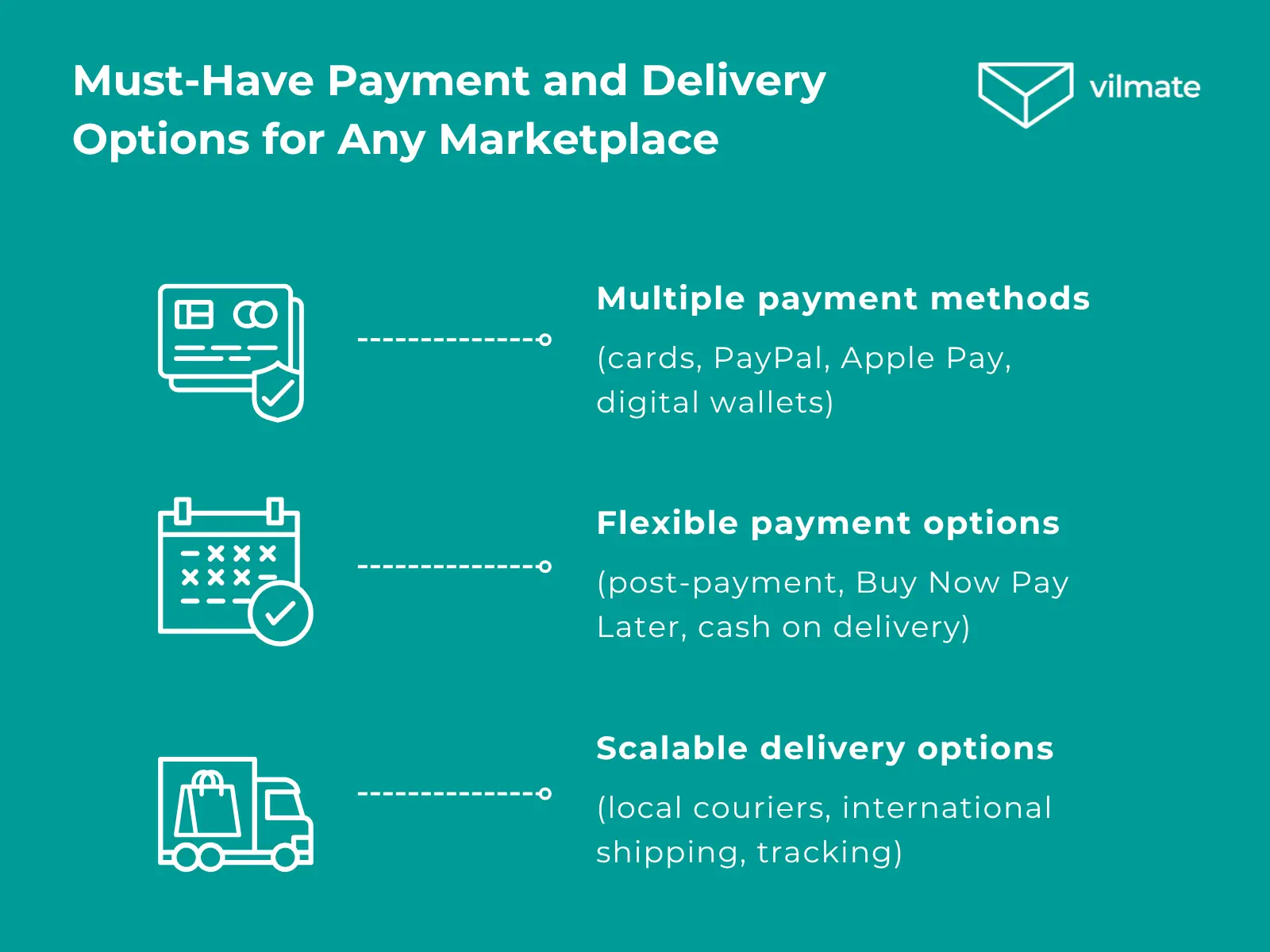
Step 7: Payments, Delivery, and Security
Customers should have simple and secure ways to pay and receive their orders. Key points to cover:
And don’t overlook security: SSL, fraud protection, and a solid system architecture help build trust and protect your users.
Step 8: Test Everything
Make sure to test every component thoroughly — leaving no area unchecked.
Check:
How the platform works for buyers, sellers, and admins
Mobile functionality
Payment and return processes
Interface issues and navigation bugs
If you’re working with a tech partner, ensure quality assurance (QA) is part of the process.
Step 9: Launch and Grow
After launch, it’s time to attract users: work on SEO, run ads, build partnerships, promote on social media, and launch loyalty programs.
Keep in mind that it’s not the website alone that drives sales — it’s the experience and process behind it. Your platform is a tool. The better the tool, the easier it is to grow your business.
Opportunities and Challenges of Launching a Platform Like Amazon
Launching an e-commerce marketplace opens up many exciting opportunities but also comes with real challenges. This is especially true if you aim to build a large platform with many sellers, a broad audience, and big goals.
Below, we’ve outlined the main advantages that make projects like this worth pursuing and the common challenges companies face during launch.
Opportunities:
Scalability Without Limits: Modern technology allows e-commerce platforms to grow almost endlessly — in products, sellers, regions, and users. This is possible thanks to flexible architecture, cloud solutions, and smart automation.
A Global Audience: Online marketplaces aren’t limited by geography. You can reach buyers and sellers worldwide, offer a wider product range, and build a diverse revenue model.
Valuable Data and Personalization: Every user action on your platform creates data. You can use it to offer personalized recommendations, improve the interface, boost conversion rates, and increase loyalty.
Efficient Operations: Tools like AI and automation help manage key processes, such as shipping, returns, payments, and customer support. This reduces your team’s workload and improves the user experience.
Different Monetization Options: Marketplaces don’t rely only on commission. You can add subscriptions, paid listings, advertising, premium features, or third-party integrations. It all depends on your audience and business model.
Challenges to be aware of:
Strong Competition: The marketplace industry is competitive. Competing against Amazon, eBay, or Etsy isn’t easy. However, many successful companies started small—by focusing on a specific niche, solving a clear problem, and scaling carefully. That strategy still works.
The “Chicken and Egg” Problem: At launch, it’s hard to attract both sellers and buyers. Most platforms start by focusing on one side—for example, attracting sellers and building a product catalog first, then driving traffic. Even Amazon had this issue when it started with books and grew from there.
Logistics and Fulfillment: If you sell physical products, logistics becomes a major part of the business—especially if you’re shipping across borders. You’ll need strong partnerships with logistics providers or a flexible fulfillment system.
Seller Price Wars: When multiple sellers offer the same products, they often compete on price. To manage this, it helps to support dynamic pricing and offer tools that suggest optimal prices. This also builds trust with buyers.
Losing Focus: Horizontal marketplaces like Amazon offer products in many categories, which can expand reach but dilute focus. If you’re just starting out, it’s better to specialize in one niche, serve it well, and grow gradually.
At Vilmate, we’re always honest about the opportunities and risks—even before development starts. That way, our clients can make smart decisions and plan for long-term success.
How Much Does It Cost to Build a Website Like Amazon?
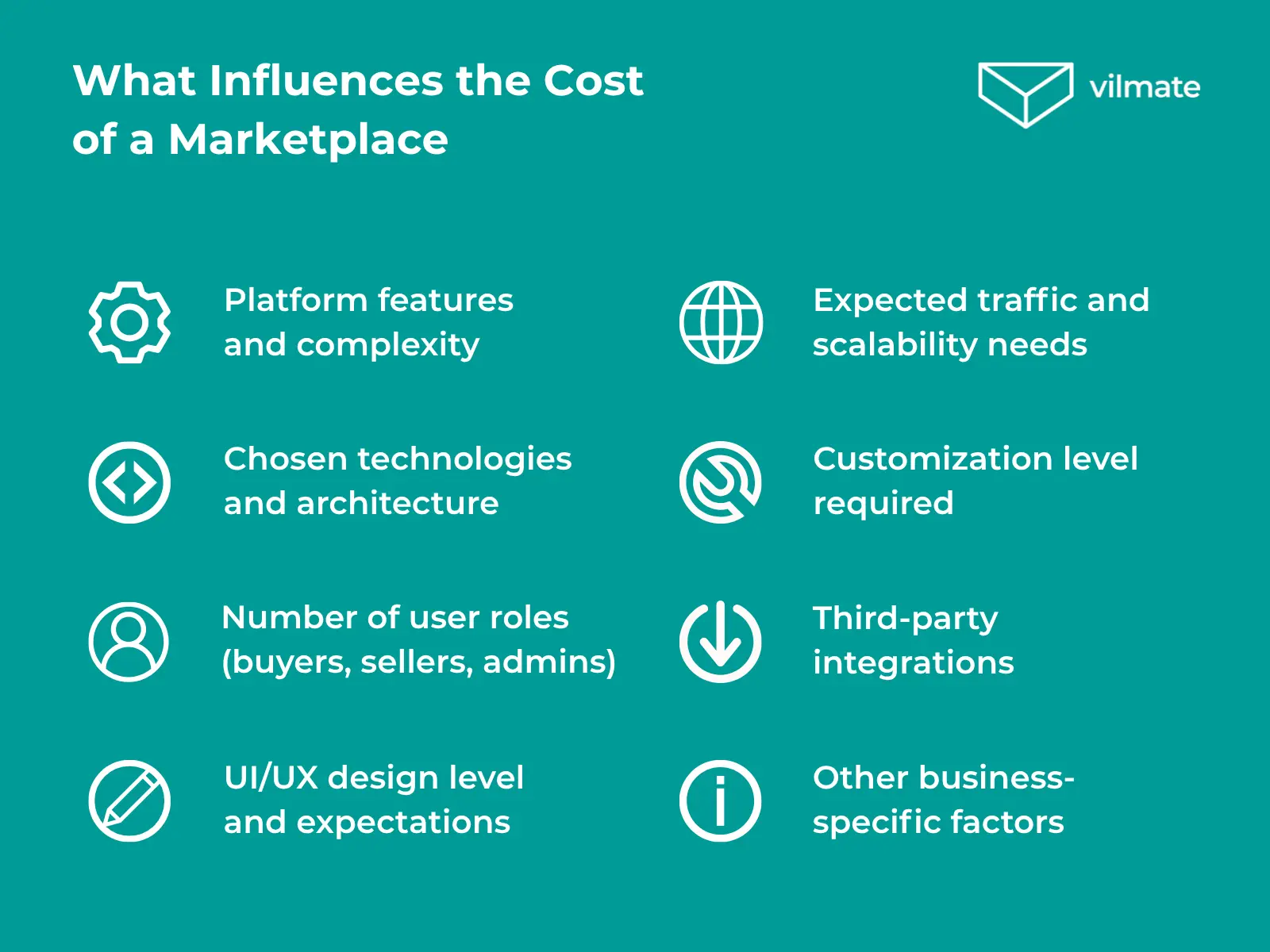
If you’ve looked for an answer to this question, you’ve likely seen a vast range of numbers — from tens of thousands to millions of dollars. And strangely enough, all of them can be both right and wrong.
The truth is, you can’t calculate the cost without first understanding a few key things:
Creating a marketplace isn’t like buying an off-the-shelf product. It’s a complex project that needs careful planning and step-by-step development.
If you’re considering building an e-commerce platform, don’t hesitate to contact us. We’ll help you determine where to start, which steps are right for you, and how to turn your idea into a fully working solution.
AUTHOR BIO
Anastasiia Rezinkina
Copywriter / Content manager
Anastasiia is a content writer at Vilmate with a focus on e-commerce, AI, and emerging tech trends. She turns complex topics into clear, practical reads — whether it’s comparing CMS platforms or unpacking how AI is reshaping online retail.
If AI has suddenly become one more thing your retail team is expected to figure out, we get it. There are vendor demos, competitor launches, internal questions, and probably a few very confident opinions about what you should be doing already. That can make AI in retail feel like a decision you’re late to. You’re […]
Somewhere between a board meeting and an e-commerce roadmap, “we need AI” becomes a non-negotiable business requirement. The pressure is real. In Dataiku’s 2026 survey of 900 enterprise CEOs, 80% said their role could be at risk if their company failed to show measurable AI gains by year-end. These circumstances can move an AI project […]
An order splits into two shipments, and no system flags it in advance. The warehouse shows stock that’s actually gone. A customer returns one item out of three, and accounting still doesn’t see that the return ever happened. Support pulls up the customer’s record and can’t tell what stage the order is at—because that stage […]
Cookies help us see what's working on this site and make it better. Your call on what we track.
Functional
Always active
The technical storage or access is strictly necessary for the legitimate purpose of enabling the use of a specific service explicitly requested by the subscriber or user, or for the sole purpose of carrying out the transmission of a communication over an electronic communications network.
Preferences
The technical storage or access is necessary for the legitimate purpose of storing preferences that are not requested by the subscriber or user.
Statistics
The technical storage or access that is used exclusively for statistical purposes.The technical storage or access that is used exclusively for anonymous statistical purposes. Without a subpoena, voluntary compliance on the part of your Internet Service Provider, or additional records from a third party, information stored or retrieved for this purpose alone cannot usually be used to identify you.
Marketing
The technical storage or access is required to create user profiles to send advertising, or to track the user on a website or across several websites for similar marketing purposes.