Must-Have Features for a Modern Healthcare Software Platform
In this article
SHARE TO:
Technology is quietly changing the way healthcare works. What once took endless paperwork and phone calls now happens inside healthcare software – from patient scheduling and billing to secure data management and modern telehealth software solutions. These digital tools have made medicine faster, more organized, and in many ways, more accessible.
Still, if you ask any doctor or nurse, they’ll tell you: the systems aren’t perfect. Many health management systems feel heavy, confusing, or disconnected from real medical routines. Instead of helping, they sometimes slow things down – endless logins, too many clicks, not enough clarity. Most clinicians use multiple medical software programs just to complete a single patient visit, and it’s easy to lose focus on what matters most.
The good news is that healthcare tech is evolving fast. Advances in AI in medical research, data analytics, and connected devices enable developers and software companies to create specialized healthcare apps tailored to specific fields, including cardiology, radiology, mental health, and beyond. But building the right software isn’t just about new features or trends. It starts with understanding what doctors actually need and what gets in their way.
In this article, we’ll examine what still frustrates medical professionals about today’s platforms, explore the essential features of a modern practice management system, and consider how thoughtful design can bridge the gap between technology and the realities of clinical work.
Common Challenges in Healthcare Software and Digital Platforms
Digital systems are now part of nearly every clinic’s daily routine. They handle scheduling, billing, and patient records – at least in theory. In practice, many doctors admit that these tools often slow things down instead of making work easier. Too many clicks, too many screens, and not enough time with patients.
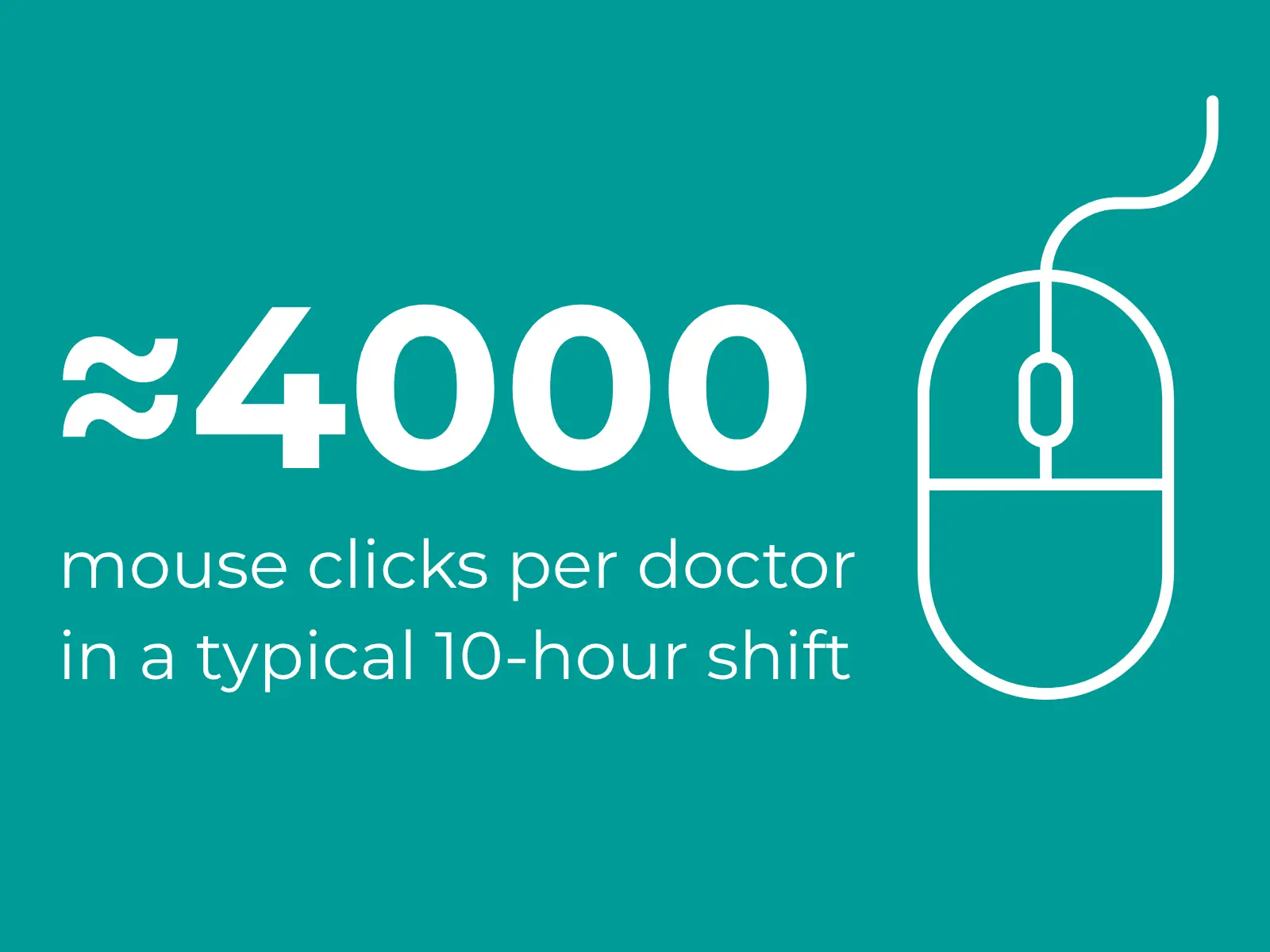
Medical professionals spend almost half of their workday interacting with software instead of providing care. Surveys show that most physicians feel digital platforms take more time than they save. Researchers have counted nearly 4,000 mouse clicks per doctor during a typical 10-hour shift to complete routine documentation. It’s no wonder digital fatigue has become part of everyday clinical life.
Most of these frustrations come from the same design flaws:
Systems that don’t communicate properly, forcing staff to re-enter the same data across modules.
Interfaces that look dated and bury key functions under too many menus.
Generic software that claims to fit every clinic but ends up fitting none.
Steep learning curves that turn onboarding into a week-long challenge.
Data everywhere, but little of it turned into practical insights.
Security steps that protect privacy yet slow clinicians down when every second matters.
It all adds up to the same reality: healthcare software has become powerful but not always practical. The next generation of healthcare software solutions must close that gap – helping doctors spend less time wrestling with technology and more time caring for patients.
Technology is everywhere in modern healthcare. It manages appointments, billing, and records – sometimes even entire patient journeys. And yet, more tools don’t always make life easier for medical teams. What really matters is how well those tools fit the way people actually work.
The best platforms, whether it’s an EHR system, a CRM, or a telehealth app, all have one thing in common: they help people focus on care instead of fighting with software.
Built around real routines. Good platforms mirror how doctors and nurses work in real life. When technology fits the flow of care, it feels natural – like part of the team.
Easy to pick up. Nobody has time for long manuals. Clear layouts, smart shortcuts, and a bit of common sense go a long way.
Everything connected. Billing, communication, and scheduling shouldn’t live in separate worlds. When data moves freely, mistakes shrink and time comes back.
Flexible enough to adapt. Every clinic has its own rhythm. Custom templates, roles, and dashboards make the system feel personal – not generic.
Automation that helps, not hinders. Reminders, reports, and synced data can run quietly in the background. That’s what frees people up for real work.
Security that doesn’t get in the way. Protection should be invisible. Encryption, access control, and tracking are there to keep patients safe, not slow teams down.
Data that actually means something. Dashboards and reports should be easy to understand at a glance. Numbers are only helpful when they help you act.
Smooth on every screen. Doctors frequently switch between laptops, tablets, and phones throughout the day. A consistent, responsive interface keeps everything in sync wherever they go.
An excellent healthcare platform doesn’t just handle information – it gives time and focus back to the people who use it. That’s the real progress technology can bring to medicine.
Must-Have Features Across Healthcare Software Systems
By now, one thing is clear: design alone isn’t enough. The proper layout helps, but what really matters are the small details that shape everyday work. Doctors don’t care how a platform looks – they care how fast it reacts, how clearly it shows data, and how easy it is to trust.
So what makes healthcare software genuinely helpful? The answer lies in a few essentials – features that quietly remove friction and give time back to the people who need it most.
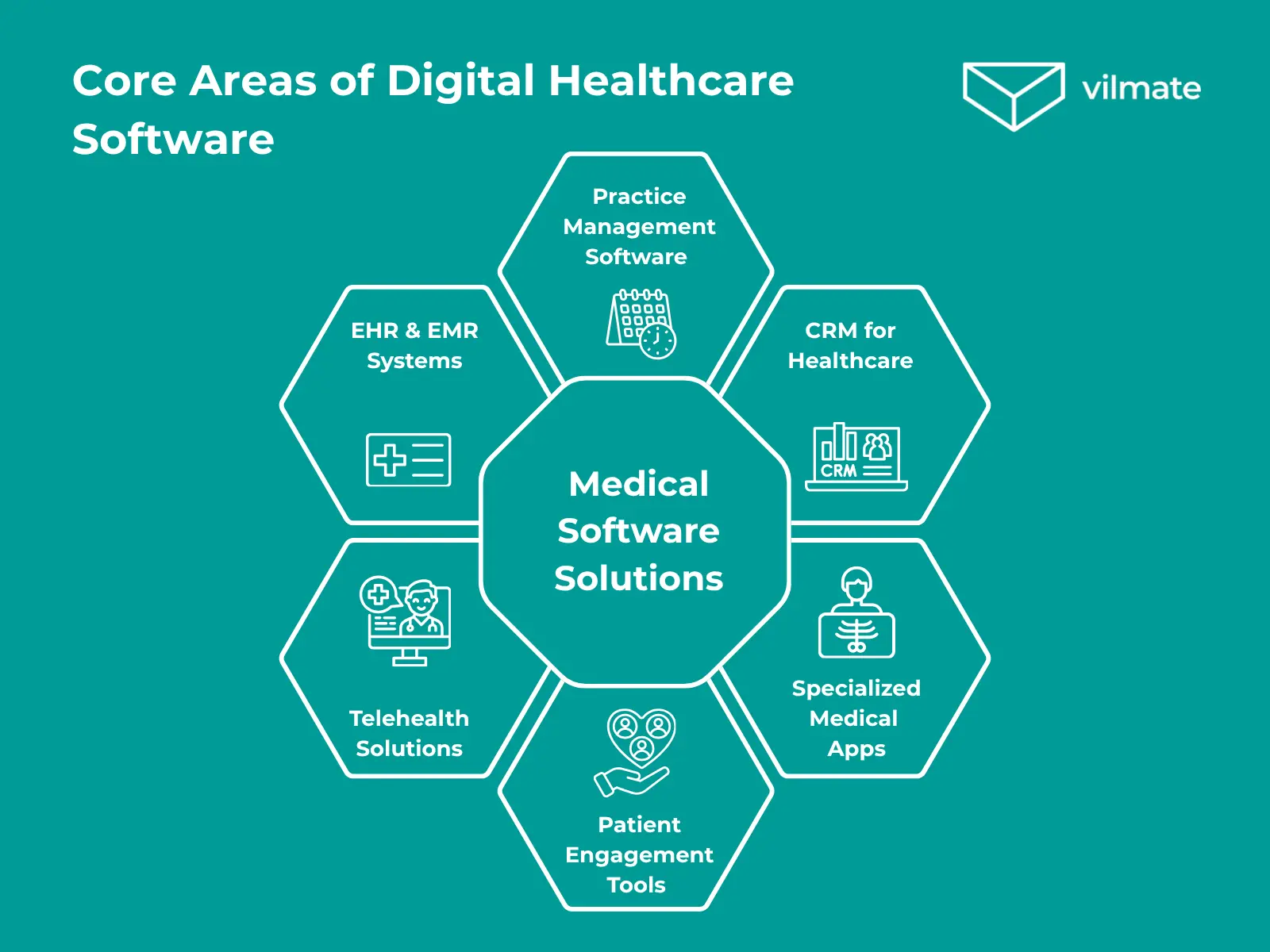
Ask any clinician about their EHR, and you’ll probably get a sigh first. The truth is, most systems still require doctors to spend time wrestling with screens instead of focusing on patients. However, when they function correctly, EHRs can be lifesavers – not just digital filing cabinets.
Documentation that flows. Notes should take minutes, not half a visit. Templates, shortcuts, or even voice input – whatever helps doctors stay present.
Interoperability that actually works. Labs, pharmacies, and hospitals must communicate with each other without requiring ten extra logins.
Reliable records. Version tracking and access logs build trust – everyone knows who changed what and when.
Fast search. If it takes more than a few seconds to find a result, that’s a design bug, not a doctor’s problem.
Helpful alerts. Gentle prompts that prevent errors, not pop-ups that interrupt thought.
Privacy by default. Security shouldn’t feel like a separate layer – it should already be there, quietly doing its job.
When an EHR stops being noticed, that’s when it’s finally doing its job.
Practice Management Software (PMS)
If EHRs store the data, practice management systems keep everything else running smoothly. They’re the quiet background that makes a clinic feel organized – or completely chaotic when they don’t work.
Scheduling that makes sense. Doctors, rooms, and patients should sync up without three phone calls or a paper notebook.
Smooth intake. Digital forms that actually save time, not new ones that replace old ones.
Billing without drama. Clear invoices, automatic payments, no “lost claim” mysteries.
Insurance checks that happen. One click should be enough – not ten fields and a fax.
Reports you actually read. Numbers that tell you something useful, like how busy next week really is.
Automation that behaves. Let reminders and approvals run quietly in the background – no need to shout about it.
Stock that never surprises you. Real-time inventory means no panic over missing supplies.
Quick team chat. Because a secure message beats another meeting any day.
When PMS software works, you don’t notice it. And that’s exactly how it should be.
CRM Platforms for Healthcare
A good CRM doesn’t just track patients – it remembers them. It helps doctors stay human in a system that often feels mechanical.
Everything in one place. Conversations, visits, preferences – one timeline that makes sense.
Follow-ups that never slip. Simple reminders mean fewer missed appointments and better care.
Feedback that matters. Ask, listen, fix. It’s not marketing – it’s respect.
A safe space to talk. Secure chat prevents minor concerns from escalating into major issues.
When patients feel remembered, they trust more. That’s absolute loyalty – not something you can automate.
Telehealth Solutions
Remote care isn’t the future – it’s the present. And yet, some platforms still feel like a 2005 video call with better lighting. The best ones disappear into the background and let the conversation lead.
Video that never freezes. Precise, stable, and private – that’s the baseline, not the luxury.
One link, no stress. Patients shouldn’t need a tech degree to see their doctor.
Reminders that help. A simple ping before an appointment keeps everyone on track.
E-prescriptions that flow. Write, send, and save – all in one window.
Any device, same experience. Laptop, tablet, or phone – it should just work.
Telehealth isn’t about replacing visits; it’s about removing distance.
Patient Engagement Tools
Healthcare doesn’t end when a patient leaves the room. Engagement tools help them stay involved in recovery – day by day, step by step.
Personal dashboards. Results and progress in plain language, not medical code.
Two-way chat. A quick message can replace days of worry.
Reminders that feel human. Nudges, not nags – that’s how you keep people motivated.
Design for everyone. Big buttons, clear fonts, no frustration.
When patients feel guided rather than overwhelmed, technology becomes an integral part of the healing process.
AI in Healthcare and Other Technologies Doctors Expect Next
We already know the must-have features that keep daily medical work running smoothly. However, many doctors argue that while most systems perform their intended function, they often fail to align with the way real medicine operates.
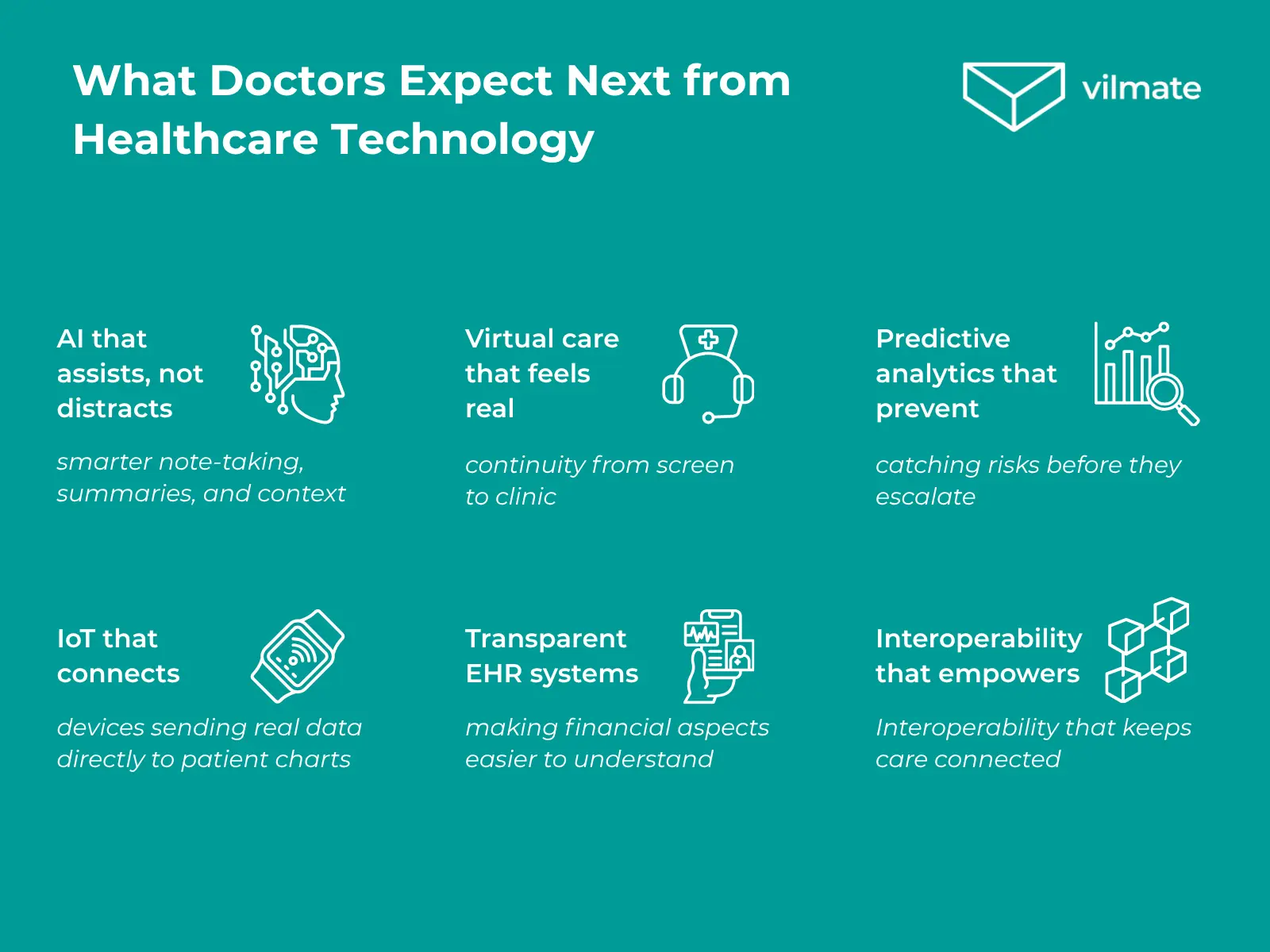
After years of adapting to software, clinicians have a clear sense of what would actually make their day easier. Here’s what they’d like to see next in healthcare technology:
AI in healthcare that assists, not distracts. Acting more like a quiet assistant – organizing notes, writing summaries, and highlighting what truly matters so doctors can focus on people, not paperwork.
IoT in medicine that connects. Connected devices automatically send accurate readings straight into patient charts, removing extra steps and reducing errors.
Virtual care that feels real. Blending seamlessly with traditional appointments, giving patients one continuous care experience no matter where they are.
Transparent EHR systems. Financial visibility that allows doctors and patients to review care options and costs together instead of switching between disconnected tools.
Predictive analytics in healthcare. Real-time data that helps detect risks early and prevent complications before they happen.
Interoperability that keeps care connected. Hospitals, labs, and specialists securely share information without repetitive data entry or delays.
These are not far-off ideas – they’re simple, realistic improvements that could make modern healthcare software finally work for clinicians, not against them.
Conclusion
As digital healthcare becomes increasingly prevalent, one thing becomes clearer: technology can’t replace empathy – but it can protect it. When software works the way doctors think, it gives them something far more valuable than automation – it gives them time.
At Vilmate, we’ve seen this firsthand. From startups rethinking patient engagement to enterprises rebuilding entire EHR systems, our goal is always the same – to design healthcare software that feels human, reliable, and effortless to use.
AUTHOR BIO
Anastasiia Rezinkina
Copywriter / Content manager
Anastasiia is a content writer at Vilmate with a focus on e-commerce, AI, and emerging tech trends. She turns complex topics into clear, practical reads — whether it’s comparing CMS platforms or unpacking how AI is reshaping online retail.
For most private clinics, digital transformation in healthcare has quietly turned from a nice idea into a survival question. It’s not about following trends – it’s about keeping patients, doctors, and processes in sync. Patients now expect the same simplicity they get from any other service: book an appointment online, get test results without calling […]
Starting a healthcare startup is exciting, but it can also be overwhelming. You’re dealing with patient privacy, strict rules like HIPAA and GDPR, and the challenge of integrating with hospital systems that often feel far from modern – all while investors push for quick results. Many founders encounter the same problem: work is split between […]
Good interface design isn’t just about convenience – it’s one of the things that makes an online product competitive. In healthcare, though, the stakes are much higher: medical UX design can affect not only how easy a product is to use but also the health – and sometimes even the lives – of patients. Nevertheless, […]
Cookies help us see what's working on this site and make it better. Your call on what we track.
Functional
Always active
The technical storage or access is strictly necessary for the legitimate purpose of enabling the use of a specific service explicitly requested by the subscriber or user, or for the sole purpose of carrying out the transmission of a communication over an electronic communications network.
Preferences
The technical storage or access is necessary for the legitimate purpose of storing preferences that are not requested by the subscriber or user.
Statistics
The technical storage or access that is used exclusively for statistical purposes.The technical storage or access that is used exclusively for anonymous statistical purposes. Without a subpoena, voluntary compliance on the part of your Internet Service Provider, or additional records from a third party, information stored or retrieved for this purpose alone cannot usually be used to identify you.
Marketing
The technical storage or access is required to create user profiles to send advertising, or to track the user on a website or across several websites for similar marketing purposes.